


The Valpolicella End of Year Report 2024

One quarter of our way through the first century of the third millennium CE. This time a thousand years ago, the Chola dynasty of India was preparing for war with the state of Srivijaya, Ibn Sina was putting the finishing touches on his immensely influential book on medicine, and Venice and Verona (and thus Valpolicella) weren’t even in the same country, La Serenissima a littoral sliver of Byzantine influence chipped out of the grand mass of the Holy Roman Empire that stretched from Denmark to Rome.
Some things, however, have changed rather less. Even in those days – as we know from a goth-friendly attestation some centuries earlier – the Valpolicella area was known for its wines made from dried grapes, which would have reliably produced the sweetness that the mediaeval consumer prized above all else. Of course, the sweet wine is still found in appreciable abundance – Recioto della Valpolicella is in fact one of Italy’s most important dessert reds – but the stylistic map has been diversified a bit since those ancient days. Dry reds now rule the roost in the valley of many cellars, and while Amarone della Valpolicella has for many years been the regional poster-child, changing fashions have meant more and more attention for the other modes, methods and genres coming out of this storied viticultural location.
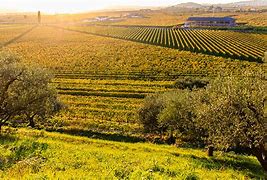
But of course, as we know, not all of the style is in the hands of the winemaker – most of it, indeed, comes down to the choices made by Mother Nature, which can be notoriously changeable year on year. Therefore, if we really want to take a look at the wine landscape in the Veneto in 2024, the only place to start is in that very landscape, to see what the weather had in store for it, and to deduce what sort of wine the harvest might produce.
How was the 2024 vintage in Valpolicella?
Every year presents its challenges (well, almost every year), and 2024 had its share. There’s no doubt that we’re continuing to see the effects of global warming, with the trend towards hotter summers holding for this year. The president of the Consorzio vini Valpolicella Christian Marchesini had this to say:
‘This year, the growers have once again had to confront complex weather conditions that showed the increasingly evident impact of climate change in action, a challenging unfolding situation that obliges producers to learn new production skills and techniques in order to preserve, first and foremost, the quality of grapes from the land in relation to the quantity. At this juncture, it’s ever-more important to match in-vineyard practices with the changing nature of demand, above all international demand.’
The long and the short of which is that there are certain challenges posed by the apparently capricious (but in reality predictably-altered) weather. The rains come in spring as they are meant to, but do so with such vindictive exaggeration as to sometimes precipitate violent flooding. The summers are hotter, and the subsequent adjustment of wind directions has bumped up a few notches the frequency and severity of storms – hail has, in recent years, become an especially implacable enemy of many wine areas, for instance the Prosecco hills – leading winemakers to contend with everything from fungus prevalence to a loss of yield as grapes get hacked roughly off their stems by the pitiless rain.
And yet it would be a churlish winemaker who begrudged the now reliable late-season heat and faithful ripening that can now be expected of grapes, and in spite of these climatic difficulties it must be said that the paths up which the weather is sending the wine are not all gloomy ones – in fact, it might even be said to have helped Valpolicella as a region hem closer to the skirts of the zeitgeist, as the only constant in the wine world is that the glowering clouds above the vineyard are nothing like as mutable as the shapeshifting habits of taste and fashion…
What changed in Valpolicella in 2024?
In recent years – let’s say the last decade and a half – the most identifiable drift, year on year, has been towards wine that feels more grown than made; this is to say that wine whose dominant flavours are obtained from technique and process (barrel-aging, for instance) has become increasingly démodé, while wine perceived as being expressive of the terroir, wine which hasn’t been doctored or tampered with much in the winery beyond the necessities of pressing and sifting feels very much like the defining style of the age.
There’s an element of contradiction about all this. So-called ‘natural’ wine runs into the understandable difficulty that wine isn’t in fact natural. There is no wine without winemaking technique, after all, other than the rough sour berries that send the birds into a wooze every October. And on the other side, wine which responds well to such interventions as lees- or oak-aging must itself come from somewhere, must be from fruit grown deliberately to fulfil the winemaker’s brief.
This cavilling to one side, though – it’s fair to say that there’s not nothing to the distinction. It’s true that an excessive use of technique can have a flattening effect on terroir – put especially a white in in an oak barrel for long enough and, no matter what it is or where it’s from, sooner or later all it’ll taste of is the barrel. On the other hand, such techniques are identifiably part of regional winemaking traditions, and interact with the local raw material in such a way as to be, effectively, expressive of terroir in a different way (for instance, nothing could be more ‘from its place’ than sherry, whose complicated methods are all in the service of encouraging the settling on the wine of a wild yeast strain only found in the region). However, while these techniques may be unique to the traditions of an area, there’s no doubt that less intervention brings us olfactorily to the vineyard and its circumstances in a more direct manner, with the same grape grown in two different vineyards or in two different years often showing remarkable differences between them.
With that in mind, the last few years have shown a notable trend in the Valpolicella area away from the traditional Amarone, made with the grape-drying techniques, and towards the Valpolicella Superiore style, made with normal vinification methods. Because the dried grape technique, known here as appassimento, has the effect of concentrating the sugar in the resulting juice, Amarone has always tended to be a wine with significantly greater alcoholic percentages than what you find in the regularly-labeled Valpolicella wines, even those called ‘Superiore’ (i.e. the style of Valpolicella with higher alcohol).
But it’s here where the two parts of our article meet, as climate change is proving not just a challenge but also an opportunity. As summers get hotter, so the grapes of the Valpolicella are ripening more and earlier, and more reliably too year on year. What this means for the region is that more and more top notch wine is being made without appassimento, but still labellable as ‘Valpolicella’ (i.e. not having to resort to the ‘Rosso Veronese IGT’ as with, for instance, a wine made 100% from corvina). As a result, heady, powerful wines from the traditional Valpolicella blend – sometimes reaching as much as 16% alcohol, even – which are nonetheless considered expressive more of terroir than technique, lacking the peculiar raisin note that all passito wine carries with it.
In order to inform the public more widely about this very old yet newly modish style, the Consorzio Tutela Vini Valpolicella has for the last few years put on a special event, ‘Venezia Superiore’, where winemakers bring their wares to the canalsides of La Serenissima to get a bit of word-of-mouth (or word-of-palate?) going.
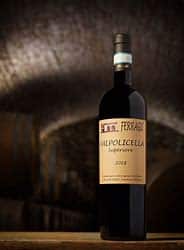
Some of the best Valpolicella Superiore wines out there include the Bertani Ognisanti, the Le Sassine by Le Ragose, the more minimum-intervention style wine by Musella, and the titanic offering from Ferragù.
Which were the wines of the year?
With that in mind, then, it’s no surprise to see Superiore wines featuring quite prominently in our list of the year’s top releases. Bottles like the Valpolicella Superiore Classico 2021 by Rubinelli Vajol, which wows with its precision and freshness, and the Cà La Bionda Casal Vegri 21, with its grainier feel and more herbal profile, not to mention the Cà Rugate Punta 470 2020, with a bit more age on it than many current releases of Valpolicella Superiore giving it just a hint of balsamic character.
Elsewhere the Rosso Veronese IGT genre continued to grow in prestige and importance, with Allegrini’s La Poja and the Zenato Cresasso in particular showing off the value in making varietal wines from the corvina grape, while a recent tasting of the Emblema by Piccoli convinced this writer that there still remains unexplored territory in the world of appassimento.
Meanwhile, in the world of Amarone della Valpolicella, we have found ourselves just enchanted by Le Ragose’s 2013 Riserva, a fresh, herbal, leathery, layered thing with apparently limitless reserves of olfactory complexity to offer, while in a completely different style the Corte Canella Amarone della Valpolicella has been one of our favourite finds of the year, an extraordinary example of the dark and dense Romano dal Forno style of Amarone.
But you can’t talk about the Valpolicella and wines of the year without mention of the Bertani 2015 Amarone della Valpolicella, awarded the huge honour of being named as critic James Suckling’s best wine of 2024. A wine of exceptionally balanced power and perfume that seems to be just about now entering its best years, with many more years of depth to develop, perhaps the most impressive thing about it is its relative affordability, going for hundreds less than top-name rivals like Quintarelli or Sassicaia. An absolute masterpiece.

Ph Credits to Shutterstock, Alamy, NewYearsEveBlog, and Ferragù.


