


Giuseppe Quintarelli


There are all kinds of names in the world of wine. There are stars, stalwarts, up-and-comers and legends, giants and cult heroes. There are ancient enterprises and rogue start-ups, family traditions and iconoclastic winemakers, friendly neighbourhood wineries and myths and legends. And, just every now and again, there are very special wineries, rare beasts that are, somehow, everything, all of the above. Quintarelli is one of those wineries.
Perhaps no name in the Valpolicella is more synonymous with quality, but even this is to sell Quintarelli short. First off, this is no ordinary ‘cult wine’, if that is what it is. Most cult wines, no matter how exclusive, no matter how rare, will nonetheless have the usual social media presence – a Twitter, an Instagram, and so forth. Quintarelli don’t even have a website. Their approach to new media has always been one of studied indifference (and you could argue that they really don’t need it). But this is related to the second point about them. Given their cult status, you might think they are among the most important standard bearers for the old school, for the tried and trusted ways of doing things, those handed down from generation to generation – which, while not unusual for cult wines per se, is very much within the top-tier, niche, Old World style of being a cult winery (think Domaine Romanée-Conti). But they aren’t just old-fashioned and proud – they are, in fact, among Amarone’s great innovators, some of the pioneers not only within the world of Amarone (which is, after all, a relatively young wine style), but within Italian wine as a whole.
All of which poses the question: what’s all the fuss about? What is it that makes the name of Quintarelli loom so heavy, with a shadow so inescapable, and yet so enigmatic, hard to reach, aloof? Why is it considered the first and last word in quality Amarone? What is it like, why does everyone like it so much – and indeed, does everyone like it so much? In short, what is Quintarelli?

Giuseppe Quintarelli – a name forged in history
Well, perhaps the best question to start with isn’t ‘what’ is Quintarelli, but ‘who’. In another article, we have extolled the legendary name of Romano Dal Forno, his important and unignorable innovations in Amarone, his enormous influence over the region to this day, embodied by the awesome winery that bears his name. But even Dal Forno had a teacher, a mentor, a sensei, and that man was Giuseppe Quintarelli, aka “El Bepi”.
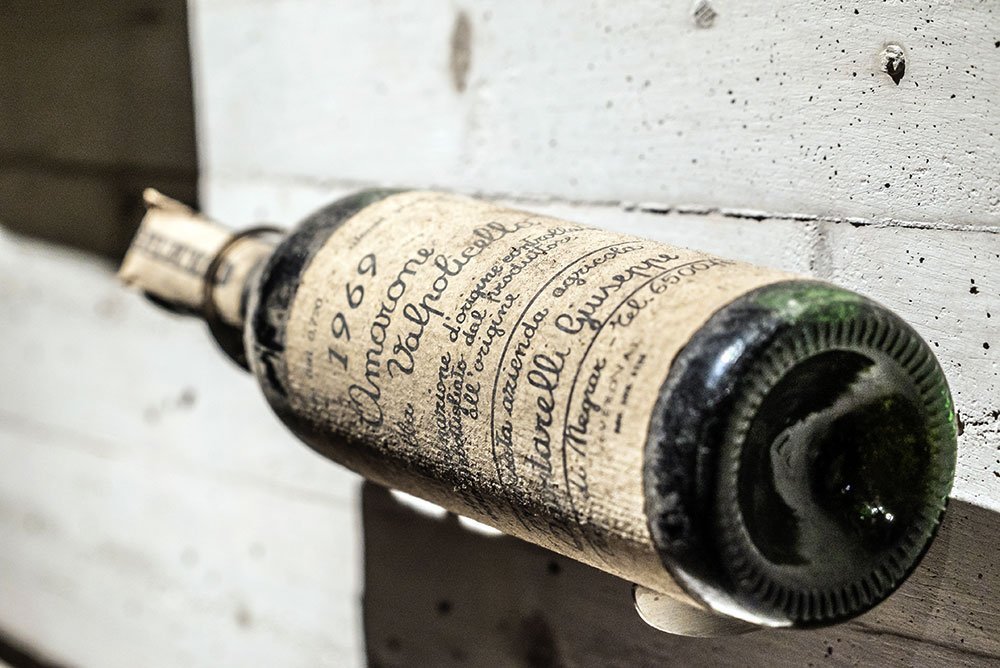
Giuseppe’s father, Silvio, first bought the land in the decade following the First World War near the village of Cerè, just south of Amarone’s spiritual home of Negrar, land that would become the family vineyard for the following decades. Silvio originally farmed the land as a mezzadria, a type of sharecrop he ran with his brothers in Marano, selling the grapes to négociants, but was successful enough to eventually purchase a vineyard, establishing the family azienda agricola in Cerè in 1924.. Giuseppe – also known affectionately as ‘Bepi’ – was born in 1927, and in his early 20s (the 1950s) began working on the land, taking over the winery’s operations in 1954, learning in the meantime from his father and grandfather the traditional methods that had sustained Valpolicella over the centuries. He also travelled – something that would become much rarer later in life – to observe what other winemakers in other areas were up to, to see what was new, innovative, changing. However, to quote writer Burton Anderson: “the philosophical Bepi, after traveling and observing the progressive techniques of others, decided that there was nothing to be gained from changing the methods learned from his father and grandfather.”
And yet this isn’t, strictly speaking, accurate. It’s true that the core winemaking techniques – big botti, ripasso, no irrigation etc – didn’t change, from the early 1960s onwards Bepi was to implement a far-reaching, thorough-going, unceasing quest for excellence in every cubic millimetre of production. Yields were drastically reduced, to ensure an astonishingly high quality of fruit. Of these low-yielding vines, the berries were not only handpicked, but selected even down to the individual grape. If the fruit’s not deemed good enough, as in the hailstorm year of 2002, Quintarelli came up with a simple solution – don’t release a vintage. Nor does the work stop in the farm – only the finest, hand-carved barrels, often engraved with a cross and peacock pattern of religious significance (Bepi was very devout) are considered good enough. Even the bottles and corks are the very best that can be found.
Bepi, along with his wife Franca, may have been committed resolutely to tradition (by contrast with the barrique-embracing moderniser Romano dal Forno), but that doesn’t mean they were content to stand still. Not only did they bring Amarone della Valpolicella to what many consider its apogee, Quintarelli finally heeded the implorings of his US importer, the great Robert Chadderdon, and produced an answer to the ‘Super Tuscan’ Bordeaux blends by the likes of Tenuta San Guido and Antinori. ‘Àlzero’ was first brought out in the early 1980s and, characteristically, it wasn’t just with the rest of Italy that Quintarelli wished to prove his winery’s worth, but with the mythical Bordeaux châteaux themselves.
But the pursuit of tradition in everything with ‘Valpolicella’ on the label extends very far indeed, even unto the things not stated. Quintarelli don’t normally produce a riserva unless the vintage is exceptional, such as 2000. Is this because don’t age their wine aged in cask for the required four years otherwise? No – in fact, Quintarelli habitually has the wine rest in the barrel for seven or eight years. The difference with 2000 and other such years is that a portion of the wine is held back for a further two years. A decade in wood – that’s what Quintarelli thinks merits that somewhat imported term riserva. Furthermore, Quintarelli doesn’t produce a ripasso – or rather, it doesn’t produce a wine called ripassso. The reason? Well, traditionally speaking, the ripasso technique was used to make regular Valpolicella wines anyway. And so, Quintarelli don’t feel the need to make a special category out of it: the entry level wine labelled ‘Valpolicella’ uses some ripasso, and that’s just how it is.
All of this right down to the tastings they do at their own winery (yes, in spite of their eremitical reputation, Quintarelli are in fact very friendly to visit!). Bepi was famously averse to the practice of spitting – wine, for him, was a subgenre of food, to be enjoyed properly by ingestion (and there’s some proof that there are retro-olfactory elements you miss by spitting, but that is hotly debated) – and so, to this day, no spittoon is provided at Quintarelli. Because that should really tell you everything you need, fundamentally, to know about the winery. Bepi might have died in 2012, at the age of 84, but his influence lives on strong, touching not only his own winery but anywhere on earth where Amarone of any kind is being served, the gold standard and last word for what this style of wine means and is.
Giuseppe Quintarelli, in every way deserving of his nickname, the “Maestro” of Amarone.

Profile – Terroir
After Bepi’s passing, the running of the estate was entrusted to daughter Fiorenza, son-in-law Giampaolo Grigoli, and grandsons Lorenzo and Francesco Grigoli. The traditional practices have been carefully maintained to the maximum extent possible, in spite of new challenges posed by changing fashions, climate change and so on. The overall ethos, however, has stayed the same. The beliefs, the ideas as to what counts as the purest expression of Valpolicella, its traditions and microclimates, those are rock solid. And, above all, the standards, the relentless standards, the endless, impossible search for absolute perfection…that pursuit remains, and is totally unshakeable.
Quintarelli is really, even by cult wine standards, a small, bijou enterprise, with only 12 hectares under vine – by way of comparison, Burgundy legends Domaine Romanée-Conti have 29 hectares, while the great Mondavi-Rothschild Napa collaboration Opus One is drawn from fully 44 hectares. 12, then, is a frighteningly low number, especially when you remember the exceptionally low yields and super-intense fruit selection. The sites are rather varied, too: the historic Cerè di Negrar vineyard is notable for its limestone content, often regarded as a reliable producer of world class wine, while the Sant’Ambrogio site is more calcareous, but impressively fossil-rich – another known source of quality.
The elevation in both sites is important, as are the steepness of the hillsides, which allow for rapid and reliable drainage from the soils. Overall production is around 60,000 bottles, each of which adorned with the iconic squiggly signature of ‘Quintarelli Giuseppe’ – not, in reality, Quintarelli’s real signature, but a graphic designed by celebrated chef Giorgio Gioco, of the legendary 12 Apostoli restaurant in Verona, now the Casa Perbellini 12 Apostoli.
It is appropriate that the greatest of Amarone producers has its home so close to the birthplace of Amarone itself. Dating from the 1920s means that it actually predates the officialising of the Amarone style in the 40s and 50s, which meant that the decisions Giuseppe made weren’t just considered examples of fine Amarone, but perhaps even defined what Amarone was for many people. But it’s not just Amarone – the whole range of Quintarelli has become legendary, from the most traditional to the most innovative. In the end every winery is judged on the juice – and Quintarelli’s list is among the most fabled in the country.
Wines by Giuseppe Quintarelli




The Wines
It starts, as it must, with the Amarone della Valpolicella – but, as with all the great wineries and their signature releases, we’re not talking about some stable product here, reliably the same every year. Vintage variation is not some gimmick or some marketing tool or even (as this writer once heard someone say) an excuse to cover up less good years. It is, in fact, the inevitable by-product of idea of expressiveness. If you want a wine that isn’t simply a kind of mass-manufactured merchandise but one that truly reflects the land, the soil, the territory, it’s got to be sensitive to the differences between the years, two of which are never identical. And what’s a good year for one region might be less so for another, as a hot year in Bordeaux might be great for a cabernet sauvignon-heavy producer, but those over the border in Sauternes might curse the acidity-flooring warmth. Of course, there are some things that all winemakers desire, from the dry summers to the diurnal temperature variation – and obviously nobody, absolutely nobody, wants hail. Never.

How Amarone wine is made – Infographic
On a basic level, however, Quintarelli is one of the easiest top wineries to judge the vintages from, as if the vintage isn’t very good there is no Quintarelli Amarone from that year. Full-stop. Such are the standards at HQ in Cerè that the fruit has to reach a certain level of quality or it won’t be made into Amarone. However, that doesn’t mean that, once that stratospheric threshold is reached, there’s no difference between those fantastic, high level wines. So, as we’ve said, there is no 2002 vintage for instance, but how to tell between the years that do exist?
Frankly some of this is likely to be down to preference and even to suggestion (regrettably, if you tell someone that a vintage is particularly excellent and another is more indifferent, they will likely sense this no matter what’s in the glass!). However, we can say that some are big stars, sometimes in line with the rest of the region like the 1997 or the 2000, and sometimes rather in contradistinction with how the vintage went for everyone else, like the 2003.
Every choice made for the production of the Amarone is incredibly careful, judicious, precise. As mentioned above, fruit selection at Quintarelli is a process of extraordinary intensity, sometimes down not just to the bunch but even to the berry. Those grapes are dried on arele in the fruttaio from harvest until the end of January, which is a pretty massive session! In addition to which, Quintarelli is further distinguished by two things: firstly, the exceptional care they take in the arrangement of the grapes, to encourage the best and most even appassimento; and secondly, by the encouragement of botrytis or noble rot, which not everyone in the region is after (it is a risky practice, and you can accidentally get bad rot if you don’t know what you’re doing).

Appassimento Technique
Everything is done slow: after drying, the grapes are pressed and macerated with the skins for 20 days, which is assuredly towards the top end. Fermentation begins during this time, as the indigenous yeasts go to work on the juice. The official fermentation period in the stainless steel vats is also a very slow affair, a long-drawn-out 45 days, after which the wine is transferred to large format Slavonian oak botti where it will rest for seven or eight years, which is pretty extravagant going even for Amarone. In this way, technically, every Amarone from Quintarelli is a riserva – but the official Amarone della Valpolicella Riserva will be aged for another two or three years, and will only be produced in years of historic quality.
The result is extraordinary, of course. Every year will be different, as befits a wine so exquisitely sensitive to terroir, but the essential lineaments of the house style are always distinguishable – the alcoholic power is there, for sure, but this is among the most balanced, the most finessed, the most integrated of any of the great high-strength wines of the world (one thinks of Château Rayas Châteauneuf-du-Pape, perhaps – but that’s the rareified air we’re breathing here), an extraordinary supple, floral and aromatic wine, with both genuine sour crunch and deep satisfying forest fruit complexity, huge and filling and refreshing all at once. But as with all top wines it’s with age that the class really begins to show, as those forest fruits shade into leaves, those sour cherries into something more like balsamic, and perhaps the impression that the wine has developed a cigar habit, with the gentlest and woodiest sensation of fine tobacco – all this and everything else, to those notes of illimitable versatility, that defy the enchaining efforts of words. Among the really great wines of the world, these are usually the top offerings from the Quintarelli winery, fetching really extravagant prices both for the quality and rarity.

Amarone Tasting Notes
Rare not least because, again, they don’t make it every year. When they don’t, they’ll release a vintage of a second wine so good that it’ll make you wonder what on earth a ‘good enough vintage’ counts as, exactly (it should be noted that the year has to be up to snuff for them to make this one too). Rosso del Bepi is Amarone declassified, a Rosso Veronese IGT wine where the best available corvina and rondinella grapes – the traditional Amarone stalwarts – are beefed up with cabernet sauvignon to create something unique. The same practices are followed regarding appassimento, fermentation, ageing, the same aching slowness, the same precision, the same patience. By any standards a tremendous wine, fullness, fruit, acidity, ageability. This is Quintarelli’s idea of ‘inferior’ – quite something, really.
Of course, the most traditional of the traditional wines on the dry red side of the equation is the Valpolicella Classico, which from Quintarelli is always sold as Valpolicella Classico Superiore. The same assemblage (or similar) as is used for the Rosso del Bepi is used, from fruit picked a little earlier so as to maximise freshness. About half of it goes to be dried and half is pressed immediately, and fermentation for both is about 8 days, massively shorter than for the Amarone. When it’s all united it unusually undergoes the ripasso process as mentioned above, before a quite crazy 60 months in botti. All of this makes the Quintarelli Classico Superiore extremely different from your standard entry-level Valpolicella, not to mention considerably fuller and more powerful – usually coming out at 15% alcohol, this is a wine with remarkable freshness and structure, for most wineries something like the summation of oenological achievement.
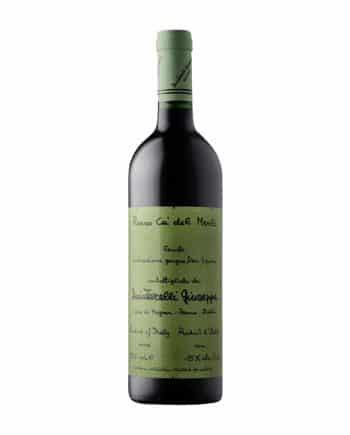
Related is the more limited release Ca’ del Merlo Rosso, nothing necessarily to do with the grape merlot but in fact a name meaning ‘house of the blackbird’, a very similar wine but classified as a Veneto IGT due to the huge variety of grapes, from cabernet franc to nebbiolo, that make up the final blend. There are other special releases on the red side as well, from the Amarone Tre Terre, named for being a composite of the three sites of Negrar, Marano and Sant’Ambrogio, to the above-mentioned Àlzero, a ‘super Veneto’ if you will, a cabernets-based Bordeaux blend that is the only dry Quintarelli wine to go into barriques, and which brings warmth and power as well as fierce concentration and finesse to the classic girondin formula. Perhaps most interestingly, the Àlzero has something of a junior partner, the fascinating Primofiore, composed of virtually half native (25% corvina, 25% corvinone) and half international (25% cabernet sauvignon, 25% cabernet franc) varieties, all aged long in the beloved traditional Slavonian botti, relatively light for Quintarelli at 14% (!), and exceptionally fresh and herbaceous.
But, fascinatingly, it doesn’t start and end with reds here. The Bianco Secco Quintarelli counts as a Veneto Bianco IGT, a white wine uncategorisable either by style or by region of production. It is predominantly made of garganega, the signature varietal of the Veneto most famously responsible for the wines of the Soave DOC, here blended with chardonnay, trebbiano and some sauvignon blanc, harvested from the site in Negrar, an unusual spot for white grapes. If the Àlzero is the only Quintarelli wine to see barrique, then the Bianco Secco is the opposite, their only wine to not see any wood whatsoever, the wine fermented (spontaneously, of course) in stainless steel where it also remains for a while on the yeasts, with Quintarelli intriguingly deploying the ‘bâtonnage’ stirring technique so as to evenly distribute the distinctive bready aroma. Interestingly, decades before it was fashionable, Quintarelli were leaving the grape must to macerate with the skins for 12 hours just after pressing, imparting a touch more tannic bite than is regular. For the rest, the wine is incredibly fresh and floral with a distinct chalky character. An exceptional expression of garganega.
But it’s now that we’re getting into the realm of the ultra-rare – the sweet wines. All of these are passiti wines, naturally, and only produced in extremely good years. The medium sweet offering is the Amabile del Cerè, a white blend made from garganega, trebbiano, tocai, sauvignon blanc and chardonnay, dried for four months and aged in barrel (including barrique) for fully six years. ‘Amabile’ officially means between 12-45 grams of sugar per litre, which means a notable but not full-on sweetness, a distinctly sweet edge. The result is an extraordinary thing, orange peel, butterscotch, you name it, near-unique and full-on world class.
But of course the signature sweet wine style of Valpolicella is not a white style, and Quintarelli’s Recioto della Valpolicella might just be the signature exemplar of the genre. We’re back to no barrique here – after fully four months of drying the grapes are pressed, fermented slowly, and aged for six years in Slavonian oak botti. A recioto is a full-bodied, full-blooded, extremely intense style, but the Quintarelli edition is notable for its incredible elegance and precision, its balance, in many ways its approachability, but also the complexity which keeps it age-worthy for decades.
And that, perhaps, is the best scale on which to discuss Quintarelli – decades. The winery as an independent concern is now entering its second century, and is showing no signs of decline. No website, no need of publicity (even this article might be overstepping little!). Just let the wine speak for itself, that’s what they prefer. And why not, when it speaks like it does – or maybe it would be better to say, when it sings?
Wines by Giuseppe Quintarelli
Ph Credits to Veneto Secrets, TastingBook


