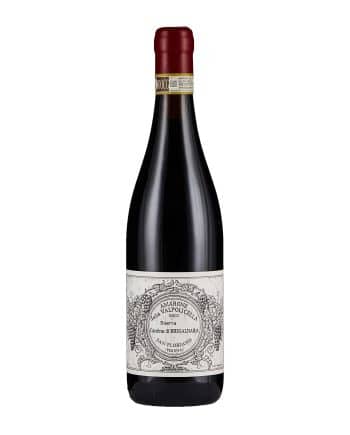
Brigaldara represents a broad view of Valpolicella, bringing together multiple perspectives, stories, and generations in a single “wine chest.” The property spans over 120 hectares of land, 47 of them devoted to vines, across three areas of Verona: Valpolicella Classica, Valpantena, and Eastern Valpolicella. Owned by the Cesari family since 1928, Brigaldara combines centuries-old traditions with fresh insights from a team of young agronomists and enologists, each vineyard managed according to its specific characteristics.
Historic mentions of “Brigaldara,” “Bragaldara,” or “Bragadara” first appear in 12th-century documents. Over the centuries, the estate was referenced as fertile land for vines and olives. The 16th-century villa at its center is surrounded by meadows, woods, and carefully terraced vineyards on Monte Masua. By 1928, Renzo Cesar had acquired the property and, together with his family, introduced specialized viticulture that gained new momentum in the 1980s through work with Roberto Ferrarini, a significant innovator in Amarone and Valpolicella. The estate’s Amarone received its first national recognition in 1997.
Today, Brigaldara’s holdings include hillside sites in Marano and Grezzana as well as new plantings in Marcellise. Traditional local varieties, Corvina, Corvinone, Rondinella, and the once-neglected Oseleta, thrive in these different terroirs. The environment is a diverse combination of olive groves, woodlands, truffle grounds, and grazing lands, forming a functional ecosystem. In the Case Vecie section, forestry, stone-wall maintenance, and the reintroduction of sheep highlight the farm’s approach to harmony between agriculture and nature.
In the cellar, every vintage is shaped by the year’s conditions. Amarone and Recioto benefit from a two-stage wood-aging process: first, they rest in small barrels to promote oxygenation and stabilize color, then they complete their maturation in large Slavonian oak casks. This method aligns with Brigaldara’s return to a lighter, fresher style of Valpolicella, balanced in structure without being overbearing in sugar or alcohol. It emphasizes the crisp aromas of the native grapes, underlining the diversity that defines Valpolicella’s thousand-year-old wine tradition.


 Bottle: 750ml
 Vintage: 2016
 Alcohol: 16%
 Grapes: Corvina 55%, Corvinone 25%, Rondinella 20%
 Ageing: Three years in small barrels followed by two years in large casks
 Aromas: Cherry preserves, ripe fruit, subtle spices, and hints of tobacco and cocoa
 United States
 Canada
 United Kingdom
 Norway
 Switzerland
 Singapore
 South Korea
 Hong Kong
 Japan
 Australia
 New Zealand
 Taiwan
 Germany
 Belgium
 Luxembourg
 Netherlands
 France
 Austria
 Denmark
 Portugal
 Spain
 Ireland
 Sweden
 Finland
 Rest of the European Union
 Italy