


What is “Appassimento”? An in depth look into the “Appassimento” technique


Amarone and Recioto della Valpolicella are the hallmark of the region, and the technique behind them – known as appassimento – is almost as old as its hills, with evidence of it being utilised in the region at least as far back as the 6th Century. But while the basics of the technique are quite well known, the precise science as to what it does to the wine and why it is used is much less so – unsurprisingly, given the rather intimidating way in which wine chemistry information is sometimes presented. But we here at All’Amarone believe it doesn’t have to be this way! So here is (hopefully) a somewhat accessible guide to what appassimento is, what it does, and why it is so prized in Valpolicella.
Key Takeaways
- Appassimento is the controlled drying of grapes after harvest, usually until December or January, to reduce water and concentrate the fruit.
- The higher sugar concentration leads to naturally higher alcohol after fermentation, with no fortification.
- Drying also boosts extract and phenolics, helping explain Amarone’s fuller body, structure, and long finish.
- Amarone can feel “sweet” even when it is dry due to glycerol, alcohol, and dried-fruit aromas, rather than residual sugar.
- The Amarone della Valpolicella DOCG sets strict rules on drying, composition, and release parameters.
What is appassimento?
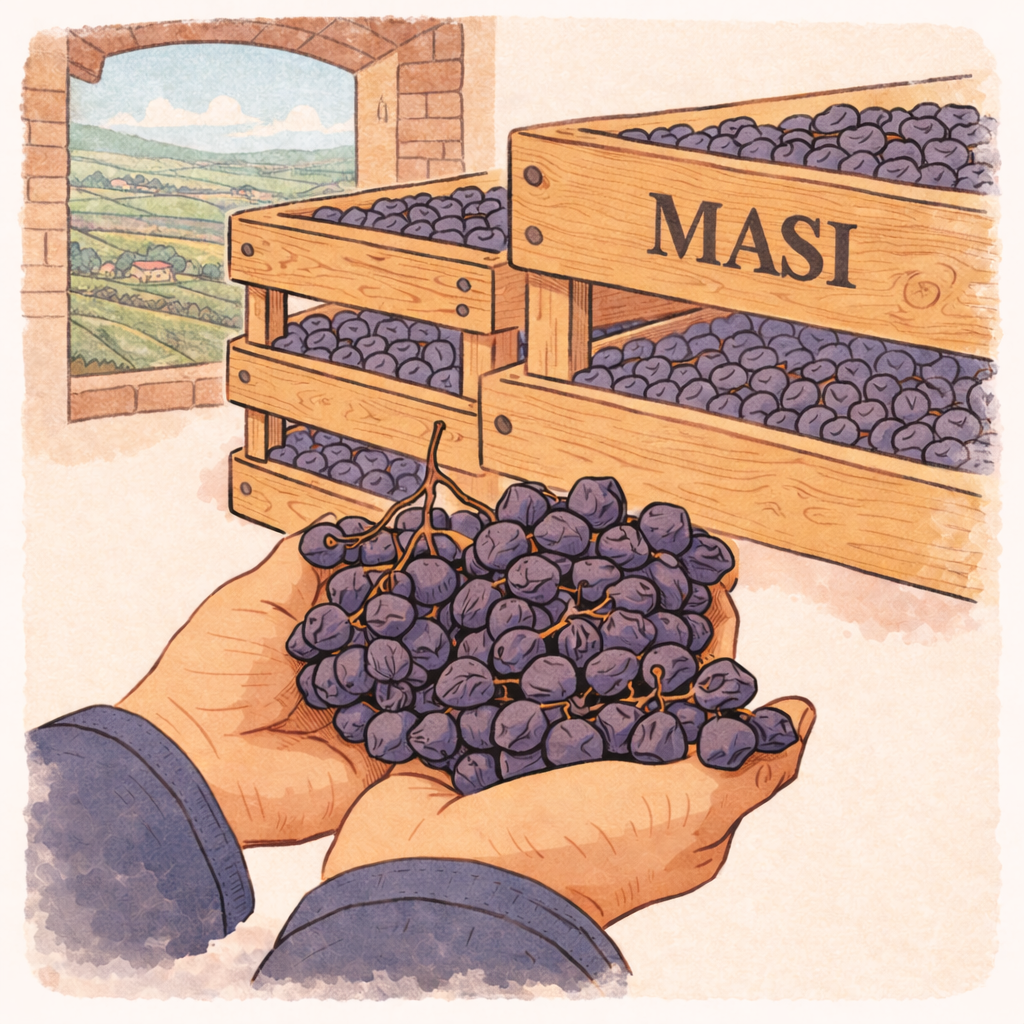
Illustration inspired by Masi Appassimento Technique
It is sometimes believed that Amarone is made from raisins which, while not strictly true, gets the general idea across.
After harvesting in September and October, the grapes are transferred to a dedicated drying space called a fruttaio, where they rest for up to four months.
This slow, non-forced drying process is known as appassimento naturale, the reference method used for Amarone della Valpolicella.
During this period, the berries gradually lose water, concentrating sugars, acids, and aromatic compounds.
Traditionally, grape bunches were laid out on large wooden racks known as arele. As explained by Tenute Ugolini, this system allowed grapes to dehydrate naturally in a well ventilated environment, with constant visual monitoring and minimal mechanical intervention. Over time, many producers have shifted toward plastic crates combined with controlled ventilation systems, mainly for reasons linked to hygiene, space efficiency, and easier humidity management.
Despite this evolution, some producers still choose the traditional approach. Masi, for example, continues to rely on bamboo cane arele for part of its appassimento process.
Among the various grape supporting systems used today such as crates, plateaux, and wooden boards, bamboo arele offer specific advantages. They allow air to circulate above, below, and around the bunches, limit contact between grapes and hard surfaces, and make it easier to inspect and remove individual berries when needed.
The trade off is space. Each arela carries approximately 90 to 100 kilograms of fresh grapes, which ultimately results in about 30 to 40 bottles of Amarone. This low yield helps explain why Amarone made using traditional drying methods remains both rare and labor intensive.
What’s the difference between Appassimento in Pianta, Naturale, and Forzato?
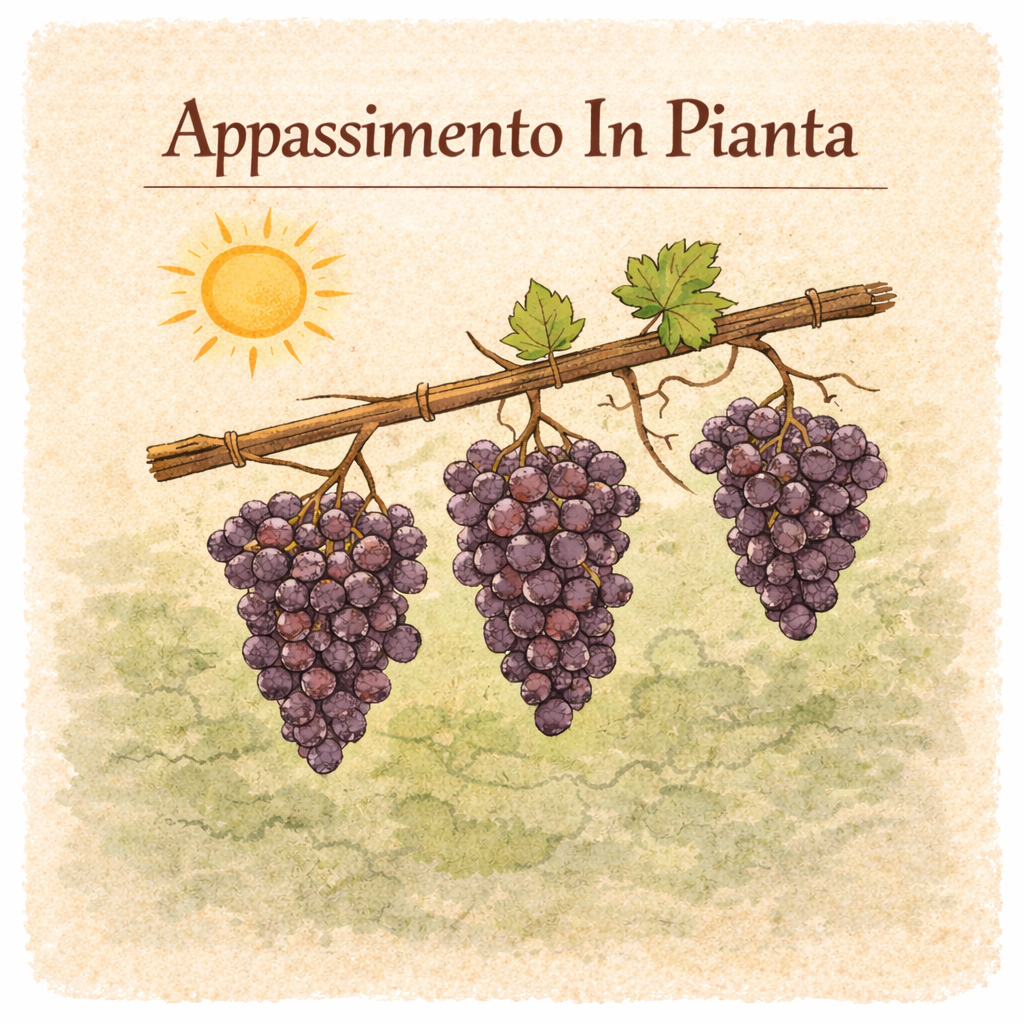
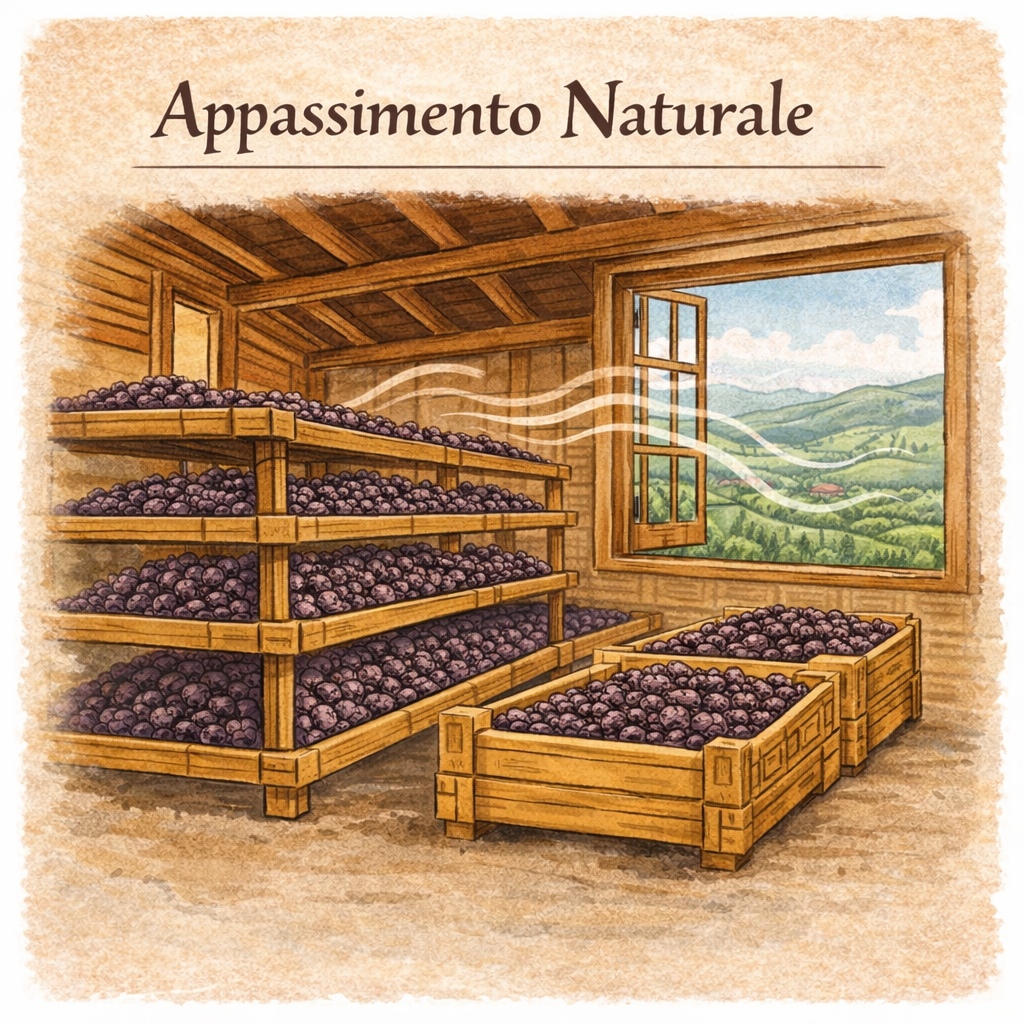
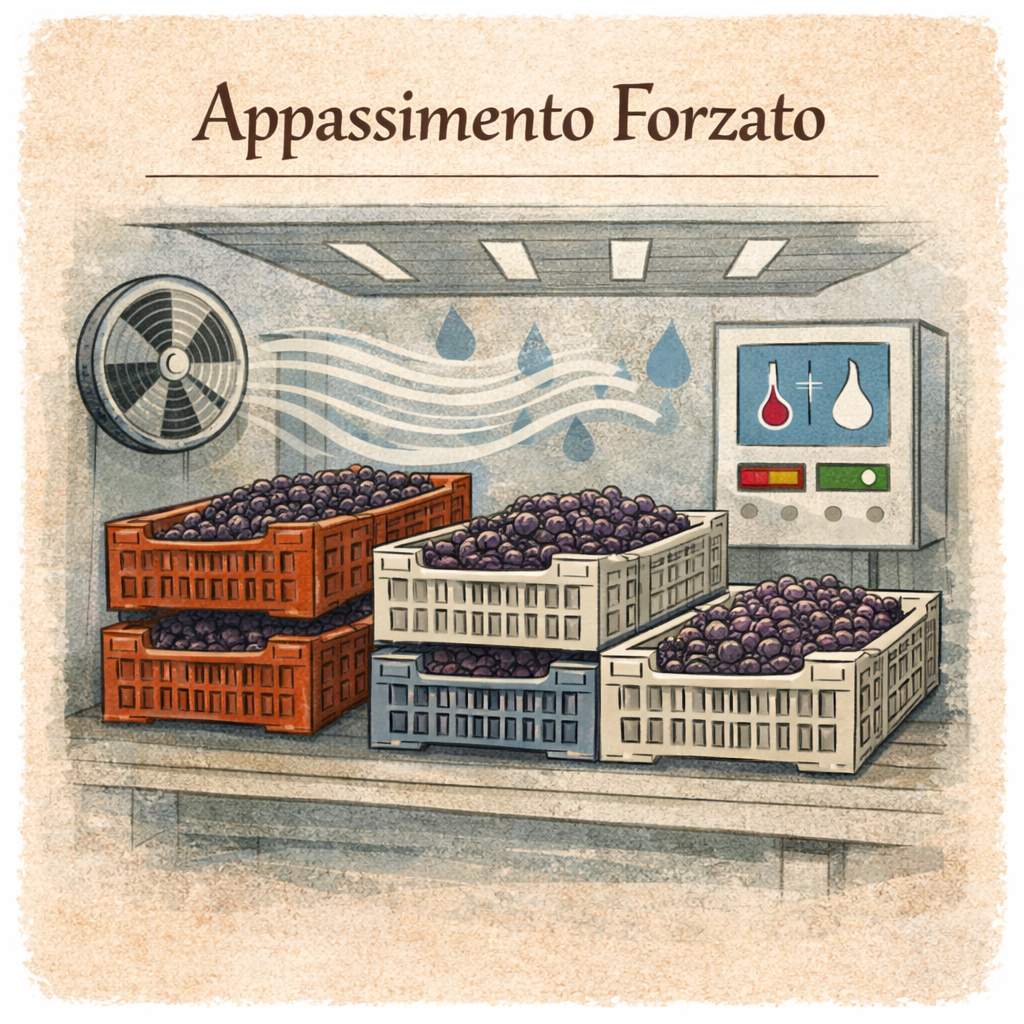
Not all appassimento is done in the same way. The method used has a direct impact on balance, freshness, and precision.
Appassimento in Pianta
This is the most extreme and least controlled method.
The grapes are left to dry on the vine, often by cutting or twisting the stem so the plant stops feeding the bunch.
Pros:
- Strong concentration
- Traditional in some historic contexts
Cons:
- Very limited control
- High risk of over-ripeness
- Loss of acidity is common
Today, this method is rarely used for high quality Amarone.
Appassimento Naturale
This is the classic and most respected approach.
Grapes are harvested by hand and laid out in:
- Crates
- Plateaux
- Wooden boards
- Or bamboo arele
Drying happens naturally, using:
- Ambient temperatures
- Natural airflow
- Time rather than force
Pros:
- Slow, even dehydration
- Better aromatic clarity
- Preservation of acidity and structure
This is the method behind the most balanced and age worthy Amarone wines.
Appassimento Forzato
This method uses technology to speed up drying.
Temperature and humidity are controlled mechanically to accelerate water loss.
Pros:
- Predictable
- Faster
- Lower risk of rot
Cons:
- Less complexity
- Aromas can feel compressed
- Structure may feel more rigid
It is efficient, but rarely delivers the same depth as slow natural drying.
What does the Appassimento do?
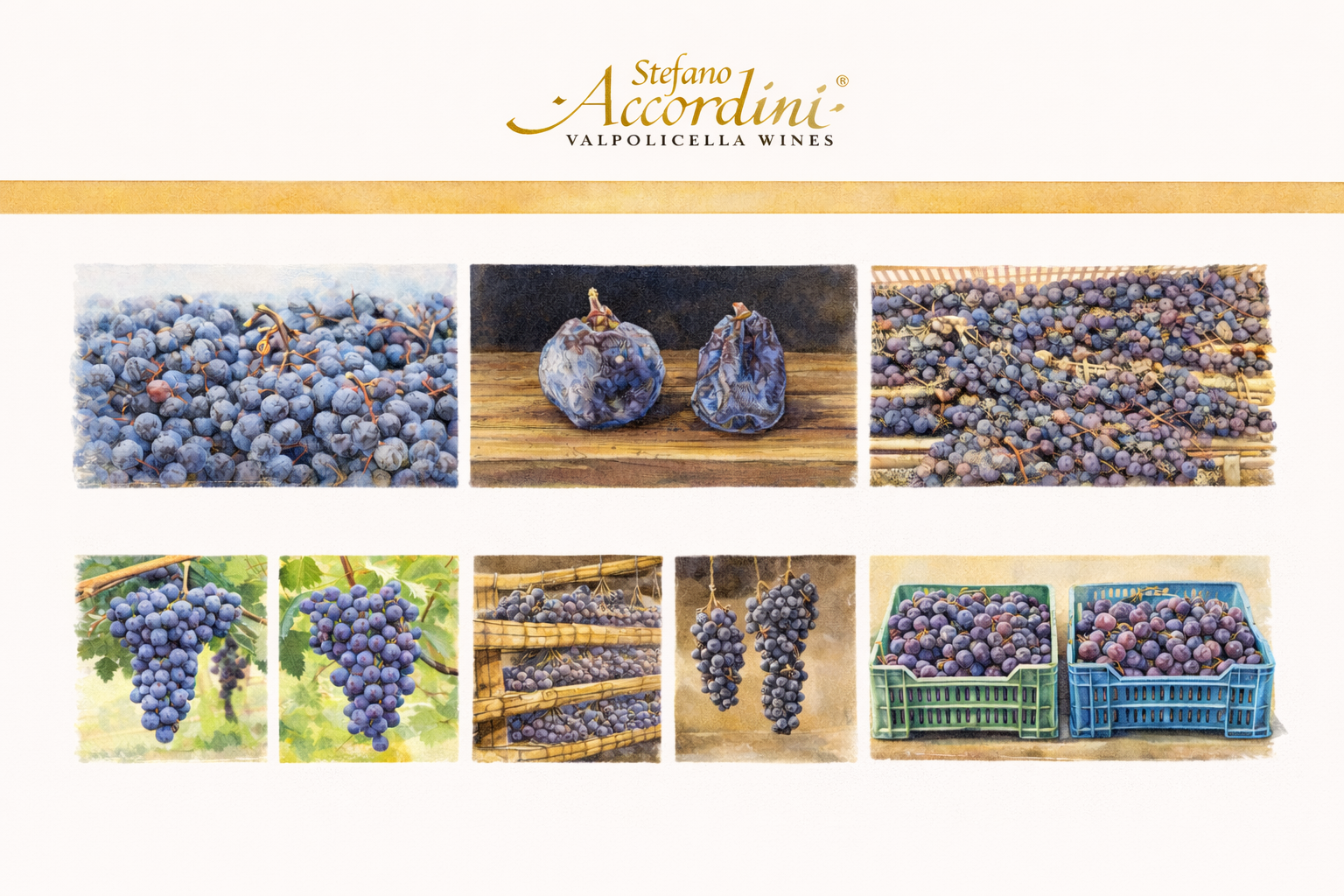
Illustration inspired by Stefano Accordini Winery
Once detached from the vine, the grape does not immediately “die” in a simple sense. Instead, its metabolism shifts dramatically. With no further access to water and nutrients from the plant, the berry enters a stress response phase that drives many of the changes sought in appassimento wines.
Water loss and sugar concentration
The most visible effect of appassimento is dehydration. As water evaporates through the grape skin, sugars become more concentrated. This directly raises the potential alcohol of the must once fermentation begins. However, the process is not just one of concentration; it also involves internal chemical transformations.
During drying, the balance between glucose and fructose shifts. Fructose, which is perceived as sweeter but is more difficult for yeast to ferment fully, decreases relative to glucose. Glucose is more readily fermented, allowing Amarone to reach high alcohol levels while still finishing dry.
Effects on acids and mouthfeel
Another major consequence of appassimento is the modification of acidity. The grape metabolises a significant portion of its malic acid during drying, while tartaric acid remains largely intact. Because malic acid is sharper and more aggressive on the palate, its reduction contributes to the softer, rounder feel typical of Amarone.
This is a crucial point: Amarone is not simply powerful; it is broad. The smoothness many people associate with the wine is already being shaped before fermentation even begins.
Phenols, tannins, and aromatic complexity
As grapes lose water, the ratio of skin to juice increases. This leads to a higher concentration of phenolic compounds, which are especially abundant in the dark skins of Valpolicella’s native varieties.
Phenols can be broadly divided into two groups:
- Flavonoids, which include tannins and anthocyanins and are responsible for structure, grip, and color stability.
- Non-flavonoids, which include many aroma-active compounds as well as substances such as resveratrol.
During appassimento, the breakdown of cell walls in the skins allows for easier extraction of these compounds during fermentation. The result is a wine with greater depth, layered aromatics, and long aging potential.
Glycerol and perceived sweetness
Fermenting must made from dried grapes places yeast under significant osmotic stress due to high sugar levels. One natural response is increased production of glycerol. Glycerol does not add sugar, but it contributes viscosity and a rounded texture on the palate.
This is one of the main reasons Amarone can feel “sweet” even when it is analytically dry. The sensation comes from texture, alcohol, and aromatic richness rather than residual sugar.
What Is the Difference Between Ripasso and Appassimento?

Although Ripasso and Amarone are closely linked, they are based on two very different processes.
Appassimento is the drying of grapes before fermentation.
The grapes lose water, sugars and compounds become concentrated, and the wine is fermented from dried fruit.
Ripasso, on the other hand, is not a drying method. It is a second fermentation technique.
In Ripasso:
- Fresh Valpolicella wine is fermented again
- It is passed over the skins left from Amarone production
- The wine gains body, color, and aromatic complexity
So the key difference is timing and intent:
- Appassimento changes the grape itself before wine is made
- Ripasso modifies an already finished wine
This is why Amarone is structurally deeper and more complex, while Ripasso sits between Valpolicella and Amarone in weight and intensity.
Appassimento and fermentation: why it’s difficult

High sugar levels, rising alcohol, and nutrient limitations make fermenting appassimento musts to dryness technically demanding. Sluggish or stuck fermentations are a real risk, especially if grapes were over-dried or poorly selected.
Successful Amarone depends on careful yeast management, temperature control, and timing. The goal is to convert the concentrated sugars fully into alcohol while preserving freshness and balance.
Appassimento and Amarone della Valpolicella DOCG regulations

The Amarone della Valpolicella DOCG does not merely reference appassimento, it tightly regulates it. These rules exist to protect typicity and prevent shortcuts that could compromise balance or identity.
Grape drying requirements
- Grapes must be dried naturally after harvest.
- Artificial heating is prohibited; environmental controls are allowed only if they replicate natural conditions.
- Grapes may not be vinified before 1 December, ensuring a sufficiently long drying period.
Minimum composition thresholds
At release, Amarone must meet strict analytical parameters, including:
- Minimum alcohol: 14% by volume (naturally obtained)
- Minimum total acidity: 5.0 g/L
- Minimum dry extract:
- 28 g/L for Amarone
- 32 g/L for Amarone Riserva
These extract levels help explain Amarone’s density and mouth-coating presence.
Residual sugar limits
Although Amarone is dry, the DOCG allows small amounts of residual sugar tied to alcohol level. In practice, most Amarones remain well within the dry category, with structure and acidity counterbalancing any remaining sugar.
Why Appassimento matters
Appassimento is often reduced to the idea of concentration, but this oversimplifies what is actually happening. The process reshapes the grape from the inside, altering sugar composition, softening acidity, increasing extract, enhancing phenolic content, and setting the stage for high alcohol without fortification.
It transforms the profile of Valpolicella from freshness and brightness into breadth, depth, and longevity. Without appassimento, Amarone as we know it would not exist.
Far from being a relic of the past, the technique remains central to the region’s identity. What has changed is our understanding of it. Today, centuries after its first use, we are finally able to explain not just that it works, but why.
A Shared Appassimento Initiative: Terre di Fumane
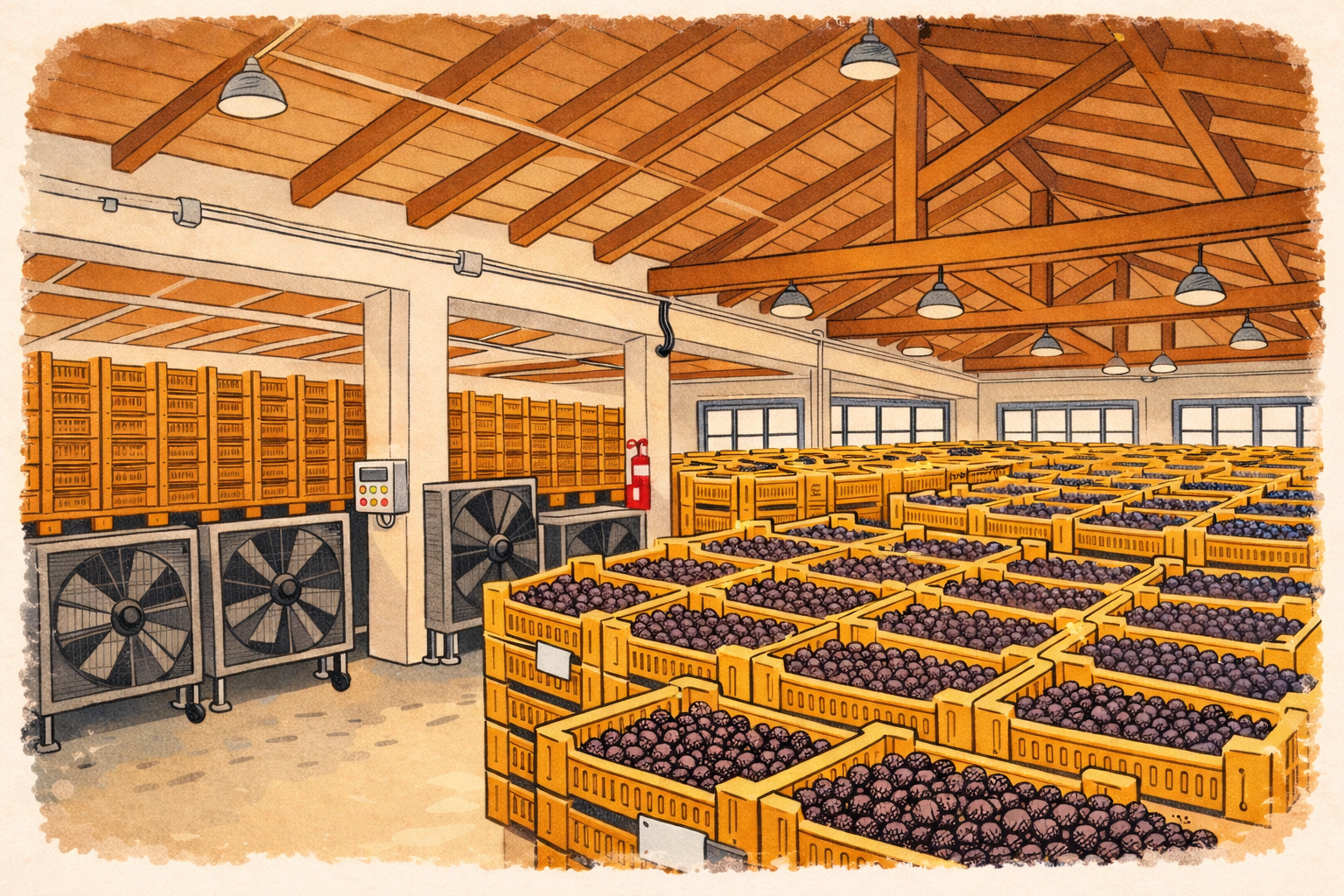
Terre di Fumane is a Valpolicella initiative created to support the appassimento process through shared, purpose-built facilities.
Rather than being tied to a single producer, it provides a cooperative fruttaio where grapes destined for Amarone and Recioto can be dried under constant technical supervision.
The idea of a cooperative drying facility took shape in 1994, when winegrower Franco Allegrini brought into practice an entrepreneurial concept developed by Roberto Ferrarini, professor of oenology at the University of Verona.
Ferrarini had dedicated years of study and research to the appassimento process, focusing on how controlled environments could reduce risk while preserving the balance and integrity required for top-level Valpolicella wines.
The collaboration between academic research and hands-on winegrowing experience led to the creation of a shared drying structure, laying the groundwork for what would later become Terre di Fumane.
Over time, the project has continued to evolve, showing how appassimento today is both a traditional practice and a collective technical discipline.
Initiatives like Terre di Fumane highlight how the most delicate phase of Amarone production is often supported not only by individual producers, but by shared knowledge, infrastructure, and long-term research within the Valpolicella community.
More information about the project is available at terredifumane.it.
Is Climate Change Impacting the Appassimento Process?
As global temperatures shift, traditional grape drying methods like appassimento are facing new challenges.
The way grapes lose water and develop flavor and aroma compounds during the drying period is influenced by temperature.
Warmer conditions can speed up dehydration and change what happens inside the grape, with potential effects on the resulting wine.
Research from the University of Verona suggests that temperature during postharvest drying affects grape chemistry in meaningful ways.
Lower drying temperatures tend to preserve acidity and promote the formation of certain desirable aroma compounds,
while higher temperatures can push the grapes toward other metabolic responses. These differences can subtly influence wine balance and profile over time.
If you want to explore the science behind this, the full study is available here.
For producers who still use traditional appassimento naturale, this means paying even closer attention to the drying environment,
not just humidity and airflow, but temperature too. In a world with warmer autumns and less predictable weather,
careful fruttaio management is an important tool to protect the quality and character of Amarone.
In short:
- Warmer temperatures can speed up grape dehydration
- Faster drying may reduce freshness and alter balance
- Lower temperatures help preserve acidity and aromatic clarity
- Careful fruttaio management is increasingly important
Conclusion
Although appassimento is most closely linked to Amarone and Recioto della Valpolicella, grape drying has a long history across Italy and beyond. In Lombardy, Sforzato di Valtellina DOCG applies a similar approach to Nebbiolo (or Chiavennasca as it is locally called), producing a powerful dry wine shaped by dehydration before fermentation. In Veneto, Malanotte del Piave DOCG uses partial appassimento to soften Raboso’s sharp acidity and firm tannins, blending dried grapes with fresh ones.
Appassimento is also central to many Italian sweet wines, from Recioto styles to various passito wines, where fermentation is stopped early to retain sugar rather than converting it fully into alcohol. Outside Italy, comparable techniques appear in wines such as French Vin de Paille and in traditional sun-dried wines across the Mediterranean.
What distinguishes Valpolicella is not the use of drying itself, but how rigorously appassimento is controlled and applied to produce a dry wine of depth, balance, and longevity. Amarone stands as one of the clearest examples of how an ancient technique, carefully managed, can shape the entire structure of a wine—not just its concentration.




 United States
 Canada
 United Kingdom
 Norway
 Switzerland
 Singapore
 South Korea
 Hong Kong
 Japan
Japan Australia
 New Zealand
 Taiwan
 Germany
 Belgium
 Luxembourg
 Netherlands
 France
 Austria
 Denmark
 Portugal
 Spain
Spain Ireland
 Sweden
 Finland
 Rest of the European Union
 Italy
Italy
One thought on “What is “Appassimento”? An in depth look into the “Appassimento” technique”