


Amarone 101: everything you wanted to know


Amarone 101: everything you wanted to know (but were too afraid to ask)
Amarone may be a famous wine, but it is also a complex and mysterious one, and the subject of much mystified enquiry and confused faces. Fortunately, the internet has provided us with many of your most urgent and vexed questions, and we will do our best to answer them here. So it is: everything you wanted to know about Amarone (but were too afraid to ask anyone except the internet).
What is Amarone della Valpolicella?

So, let’s start off with a big obvious one – what the hell is this stuff, anyway? Well, it’s a red produced in the Veneto region of the north of Italy, made from grapes which have undergone a special drying process to increase the body, alcohol and flavour concentration of the resultant wine. It is, justly, considered a star of both its region and the whole of Italy, and is one of the world’s most prized big reds. For more info, feel free to check out our article on how Amarone wine is made.
What is special about Amarone?
Well, rather a lot, as this list makes clear! But really the most special thing about Amarone is the longevity, the depth of knowledge and the full exploitation of the appassimento technique. Nowhere else – especially not for dry red wines – utilises grape-drying as extensively as Amarone, and there’s no designated appellation anywhere else for whom the method is as central to its identity. It’s this which gives Amarone its unique flavour profile – not just those associated with appassimento, but those which only decades and even centuries of savoir-faire, combining technique with enormous knowledge of the grapes concerned and uncountable experience of the terroir that ties it all together. The wine is not just unique in style therefore – it is also coherent and consistent to an extent virtually unmatchable anywhere else trying the style in the first place.
Is Amarone a grape or a region?

Neither! It is in fact the name given to the wine that has been made according to these specifications, made from certain grapes in the Valpolicella area of the Veneto. (For more on the method, click here!)
Where is Amarone grown in Italy?


As stated above, Amarone is not really grown, so much as made by that peculiar process. The grapes themselves are grown in Valpolicella, an area north of Verona and east of Lake Garda in the Veneto, in the north-western province of Veneto.
Where are Amarone grapes grown?

The area of Valpolicella is the only place where you can grow grapes that can be vinified and sold under the Amarone name. In recent decades however, this area has been somewhat expanded to include areas which, according to the classifiers, qualify as typical of the region and belonging to the traditional heartlands that can be described as ‘Valpolicella’. This means that we now have three zones: the Valpolicella Classica area, the historic core of the region consisting of the five villages of Negrar, Sant’Ambrogio di Valpolicella, San Pietro in Cariano, Fumane, and Marano, the borders of all of which are determined by extremely complicated lines; the broader Valpollicella allargata, which extends into the valleys of Illasi, Mezzane and Tramigna; and the unique region of the valley of the Valpantena, which in recent years has been especially increasing in interest.
Valpolicella itself is a DOC level of region, which is the second highest level of control in the Italian system. Amarone della Valpolicella, however, is a DOCG, the highest classification available, and as a result the regulations are just that bit more tight around it.
What does ‘Valpolicella’ mean in English?
Grapes have been grown in the areas around modern-day Verona since time immemorial, from at least the time of the Greeks (indeed, the drying-grapes method of winemaking was considered by the Romans to be characteristically Hellenic as a style).
This confluence has led many to think that the name of the area comes from a combination of the Latin ‘vallis’ (valley) and ‘cella’ (cellars) with the addition of the Greek ‘poly’ (many), to mean ‘the valley of many cellars’. Sadly, the reality is highly likely to have been a little less poetic, as the name probably derives from the Latin ‘vallis pulicellae’, which simply means ‘the valley of river deposits’.
Oh well. But at least those river deposits have proved undoubtedly crucial in the mineralisation of the soil for the production of wine, so it’s not a total loss.
What does Amarone mean in Italian?

‘Amarone’ means ‘[the] big bitter [one]’, amaro meaning ‘bitter’ and -one being a suffix added to Italian nouns to mean ‘big’ or ‘great’. Amaro was used to describe wines which, designed to make sweet Recioto della Valpolicella, overfermented and lost all their sugar; however, according to legend, when the Cantina Negrar winemaker Adelino Lucchese finally perfected doing this on purpose, the winery founder Gaetano Dall’Ora is supposed to have proclaimed ‘this is not amaro – it’s amarone!’ as a compliment. And so, says the story, was born the famous name of the region’s most treasured wine.
Is Amarone a bitter wine?
The name – ‘big bitter’ – is a little bit misleading. Amarone isn’t as bitter as, say, a very heavily-dry-hopped IPA, let alone an amaro as herbally medicinal (in flavour!) as Unicum, say. Instead, Amarone is bitter in wine terms – that is to say, it is bittersweet, fruit-forward, and not lacking in the bittering tannins that anchor all the other flavours in wine. People who aren’t such great fans of the extreme bitterness associated with some aperitivi and digestivi, therefore, need not be worried!
Is Amarone a dessert wine?
Without wanting to tell you when to drink whatever you want – no, it is not a dessert wine. However, the modern Amarone della Valpolicella was derived from a historic sweet wine that is still made in the region today: Recioto della Valpolicella.
Is Amarone a fortified wine?
No, but you can see why someone might think it is! For clarity, a fortified wine is any wine whose alcoholic level is boosted by the addition of spirit (usually some kind of brandy), the most famous of which are probably the Andalusian sherry and the Port wine of the Douro.
Sherries usually clock in at 15.5% alcohol (the lighter fino and manzanilla styles) or 17-22% (the weightier amontillado and oloroso, for instance); the former is trivially easy for Amarone to reach, while the latter, though obviously enormous, is just about touchable at the low end of the scale. That’s the level of alcoholic power we’re dealing with in Amarone, and achieved all under its own steam, without any additions.
What does DOCG mean in practical terms for Amarone?
 DOCG is the highest quality classification in the Italian wine system, and for Amarone della Valpolicella it defines a very precise framework for how the wine must be made. It sets strict rules on where the grapes can come from, which varieties may be used, how the grapes are dried, minimum alcohol levels, aging time, and analytical parameters such as acidity and extract.
In practical terms, DOCG guarantees that an Amarone is produced entirely within the Valpolicella area and that it follows the traditional appassimento method, with dried grapes and a long, complete fermentation to dryness. It also ensures that the wine has reached a minimum level of structure and concentration before it can be released, as shown by required aging and chemical thresholds.
For the drinker, DOCG acts as a safeguard of authenticity and style rather than a guarantee of excellence. It confirms that the wine is recognizably Amarone and not an imitation or a simplified version of the style. However, DOCG does not rank producers or vineyards, nor does it distinguish between careful, low-yield viticulture and more industrial approaches.
This is why two Amarones with the same DOCG designation can taste very different. Vineyard exposure, grape selection, drying conditions, fermentation management, and aging choices all play a major role in defining balance, freshness, and longevity. DOCG sets the boundaries; the producer’s decisions determine the final character and quality in the glass.
So – is Amarone dry or sweet?
The short answer is, dry. Amarone wines almost always contain less than 9 grams of sugar per litre, which means they qualify as dry wines. However, some Amarone can skirt pretty close to that threshold for a dry red – and don’t forget the habitual fruitiness of Amarone, which can give the impression of sweetness without actually being sweet.
How much sugar is in Amarone?
Amarone almost never goes above 7 grams of sugar for litre – which, for context, is 2 grams below the level at which a wine is generally considered to become ‘off-dry’. Amarone is absolutely, therefore, a dry wine, so why do some people consider it to have a sweet aspect?
The answer is that, while sugar is detected as sweetness by the human olfactory systems, it’s not the only thing to be so. Certain amino acids, glycerols, even alcohol itself (which by itself is otherwise completely odourless), along with the fruity and floral chemicals like esters, can communicate to the brain the impression of sweetness even where minimal sugar is actually present. Amarone is rich in all of these, especially the alcohol which carries flavours like a waiter holding a tray on which are set many plates, and will therefore seem more sweet than it technically is – in fact, it will seem more everything.
Is Amarone smooth?
‘Smooth’ is a word without a fixed definition in the wine world. This is because what might seem ‘smooth’ to one person won’t meet another’s idea of how that concept maps onto wine – does it mean fruitiness? Lack of tannin? Lack of alcohol (as in, lack of burn)? Fullness of mouthfeel (as in, presence of alcohol)? Fullness of body (as in, the presence of tannin and alcohol)? It is not necessarily clear.
So, let’s make a definition and see if Amarone fulfills it. ‘Smoothness’ in a wine can be defined as a full-bodied wine in which nonetheless every aspect – tannin, acidity etc – is integrated to make a cohesive whole. Not every wine wants to be smooth, therefore: pinot noir doesn’t want to be full-bodied, Madiran doesn’t want to integrate its tannins particularly, and albariño wouldn’t be albariño without its trademark zing. Amarone, however, is a massive wine which is nonetheless also, often a friendly wine, whose ideal expression for many winemakers is cohesive, integrated, and rounded.
As such, in a roundabout way, the answer to the question is: Yes!
So is Amarone a bold wine?

This one’s much easier – absolutely, undoubtedly yes. There’s no way to disguise that. ‘Bold’ is a word used to describe wines of particular weight and flavour impact, and there’s virtually no Amarone worthy of the name, no matter how subtle or easy-going or beautifully crafted, which can hide that boldness.
Never forget, the minimum alcoholic content for Amarone, by law, is 14%. Minimum. That’s not going to be a shy wine.
Why does Amarone have such high alcohol?
 Amarone’s high alcohol is a direct consequence of appassimento, the traditional drying of grapes after harvest. During this period, grapes lose a significant amount of water, while sugars, acids, and other compounds become more concentrated. When these dried grapes are crushed and fermented, the must contains far more sugar than that of a wine made from fresh grapes.
If fermentation is carried through to completion, yeast converts most of this sugar into alcohol, naturally pushing alcohol levels well above those of typical red wines, often reaching or exceeding 15% ABV. No fortification is involved: the alcohol in Amarone comes entirely from fermentation.
High alcohol alone does not define Amarone’s quality. What matters is how that alcohol is balanced. In well-made examples, alcohol is supported by several structural elements: sufficient acidity to keep the wine fresh, high extract to give density and weight, and firm but ripe tannins to provide grip. When these elements are in balance, the alcohol feels warm and expansive rather than sharp or overpowering.
Conversely, when acidity is low or extraction is excessive, the alcohol can stand out, making the wine feel heavy or tiring. This is why producer choices—from vineyard management to drying conditions and fermentation control—play a crucial role in determining whether Amarone feels harmonious or simply strong.
What is Amarone similar to?
Beyond being a big red wine? Very little. You can say that other bold reds with relatively high acidity will necessarily have something in common with Amarone, for instance the Sagrantino of Umbria or the Madiran of southern France. However, these wines are also considerably more tannin-heavy than Amarone tends to be on balance, while Amarone also outstrips them considerably on alcoholic content.
So what about superhigh-alcohol wines? Well yes, there are certain Australian shirazes, for instance, which have topped 16,5% and even 17%, while much Châteauneuf du Pape has, especially in recent years, reached similarly eye-watering ABVs. But, to turn the tables, both of these examples, though certainly balanced in acidity terms, rarely reach the remarkable zinginess that even many monster-level Amarones reach – and, once again, we find that tannins tend to be rather more pronounced in those examples than you find in Valpolicella’s finest.
The fact is that the appassimento technique, with the grapes particular to the region, makes a pretty-much unique wine with very few correspondents. That said, it’s fair to call it a must-try if you’re a fan of big red wines, but don’t be surprised if it really isn’t like anything you’ve had before.
What does Amarone taste like?

Amarone is, in the scale of dry red wines, among the very biggest – the very fullest, the very richest, the very highest in alcohol. All of which sounds perhaps a touch overwhelming, and indeed it would be were it not for other, balancing characteristics. Amarone you see, while big, tends not to be aggressively tannic – enough to be going along with, for sure, as much as it needs, but unlikely to leave the austere, drying sensation like a Madiran, say, or certain left-bank Bordeaux; also, it is rather higher in acidity than big reds tend to be, making it fresher and less cloying than many wines even of considerably less weight and power. Within this style a vast range of flavours is possible, but expect notes of raisins, cherries, blackberries and plums, along with (especially in older wines) things like cocoa, cigars, and even dry autumn leaves!
What is the flavour profile of Amarone?
Varied, is the one-word answer! Amarone is a style with quite a lot of range, and different winemakers will prefer different aspects of what it is possible to bring out from the wine.
However, within this variation there are certain things that are generally always true: Amarone is a big red wine, high in alcohol, and of necessity will likely be rich and powerful; it is nevertheless relatively high in acidity as well, and so much of its fruit flavour will be a little zingier than in other similarly-sized reds (think raspberries); younger wines will be more about the fruit, and more obviously powerful, while older, more aged wines will mellow out and develop in subtlety and complexity; in Amarone, those subtleties and complexities tend to take certain forms, from the prominent balsamic note in some leaner, more elegant examples to the cigarbox smokiness you often find in more powerful ones.
Beyond this, of course, there is myriad elaboration – every palate is different and, naturally, you will find different people responding with as much variagation as bottles will differ one from the other, even of the same wine from the same vintage.
But Amarone has an identity, and that identity is, broadly speaking, very noticeable and very strong. So what about superhigh-alcohol wines? Well yes, there are certain Australian shirazes, for instance, which have topped 16,5% and even 17%, while much Châteauneuf du Pape has, especially in recent years, reached similarly eye-watering ABVs. But, to turn the tables, both of these examples, though certainly balanced in acidity terms, rarely reach the remarkable zinginess that even many monster-level Amarones reach – and, once again, we find that tannins tend to be rather more pronounced in those examples than you find in Valpolicella’s finest.
The fact is that the appassimento technique, with the grapes particular to the region, makes a pretty-much unique wine with very few correspondents. That said, it’s fair to call it a must-try if you’re a fan of big red wines, but don’t be surprised if it really isn’t like anything you’ve had before.
Why do some people think Amarone tastes sweet?
Amarone is a dry wine by law, but many people perceive a soft sweetness when tasting it. This sensation does not usually come from residual sugar. Instead, it is the result of how the wine is made and how its components interact on the palate.
One key factor is appassimento, the drying of grapes after harvest. During this period, grapes lose water and become more concentrated. Sugars increase, but so do many other compounds that affect texture and aroma. When these grapes are fermented to dryness, the wine reaches high alcohol levels, while keeping very little actual sugar.
Another important element is glycerol (often called glycerine). Glycerol is produced naturally by yeast during fermentation, and its levels tend to be higher when fermenting very ripe or dried grapes. Glycerol does not taste sweet in the way sugar does, but it adds viscosity and a rounded, smooth mouthfeel. This fuller texture can easily be mistaken for sweetness.
Amarone is also rich in extract, meaning it contains a high concentration of dissolved compounds that give weight and density to the wine. This combination of alcohol, glycerol, and extract creates a plush, enveloping sensation that many people associate with sweetness, even when the wine is technically dry.
From a legal point of view, Amarone is allowed only a small amount of residual sugar, even at higher alcohol levels. In practice, most examples remain well within the dry category. When sweetness is perceived, it is far more likely coming from ripe fruit aromas, dried cherry notes, and the wine’s overall texture rather than from sugar itself.
This is why Amarone can feel powerful, smooth, and generous on the palate while still finishing dry and structured, especially when acidity and tannins are in balance.
Is Amarone high in tannins?
Basically: yes! Tannins, the bitterish chemicals found in wine skins, stalks and oak barrels (as well as in tea!) which are responsible for that famous drying-in-the-mouth sensation, are quite prominent in Amarone, and it’s important that they are. The presence of tannins is what wine people mean when they refer to ‘structure’, and it is vitally important that wines high in alcohol are ‘structured’ sufficiently, or the wine will taste and feel aimless, flabby, perhaps over the top in unbalanced fruitiness. The tannins help balance it all out, and keep it all together.
And it’s a good thing too that the appassimento process, which means such an increase in alcohol, also concentrates the tannins in the grapes. Corvina (the major grape of Valpolicella) is not naturally an enormously tannic grape, and in fact makes for wonderfully refreshing lighter reds on its own. After drying, everything is more dense, everything is in higher doses and concentrations, and so as the alcohol goes up, so do the tannins with it. Thus is Amarone capable of the same equilibrium as its fresher cousins, as well as the same tannic intensity as other famous big reds like Priorat or Chateaneuf-du-Pape.
How much is a bottle of Amarone wine?
Usually, a fair amount! Amarone isn’t cheap to make, and expensive to make right, and this is reflected in the prices. You can expect to start at about €36 at the lower end, with prestige botttles comfortably commanding prices in the hundreds.
Amarone Ordered by Price


Amarone della Valpolicella DOCG “Antonio Castagnedi” 2021
The Valpolicella Amarone “Antonio Castagnedi” is a full-bodied and structured red wine, aged for 24 months in wooden barrels. The olfactory profile is fascinating and complex, featuring notes of tobacco, licorice, coffee, and preserved red fruit. On the palate, it is powerful, warm, and balanced, a synthesis of a soft and enveloping structure and an energetic tannin and vibrant freshness.
 Bottle: 750ml
 Vintage: 2021
 Alcohol: 15%
 Grapes: 70% Corvina and Corvinone – 20% Rondinella – 5% Croatina – 5% Oseleta
 Aging: Aged for two years in new 500-liter French oak casks
 Aromas: Complex olfactory profile featuring ripe red fruit, spicy aromas of liquorice, black pepper, and hints of chocolate
 Awards: James Suckling 93/100, Luigi Veronelli 91/100

Amarone della Valpolicella DOCG “Cavolo” 2020
Bottle: 750ml
Vintage: 2020
Alcohol: 16%
Grapes: 21% Corvinone, 59% Corvina, 17% Rondinella, 3% others
Aging: Wooden barrels for at least 4 years, with 2 years in small barrels and 2 years in large barrels
Aromas: Fruit jam, sour cherry, cherry and vanilla, with hints of dried grapes and spicy notes
Awards: James Suckling 94/100

Amarone della Valpolicella DOCG “Leon” 2019
Bottle: 750ml
Vintage: 2019
Alcohol: 16,5%
Grapes: Corvina and corvinone 70%, rondinella 20%, croatina and oseleta 10%.
Aging:30 months in a combination of French and North American oak barrels with capacities of 220-500 litres followed by 8-10 months in the bottle.
Aromas: Notes of sweet spices, berry jam, cherries in alcohol, cocoa, coffee and vanilla
Awards: Falstaff 92/100


Amarone della Valpolicella DOCG Classico 2021
Bottle: 750ml
Vintage: 2021
Alcohol: 15,5%
Grapes: Corvina 60%, Corvinone 15%, Rondinella 15%, other red grapes 10%
Aging: 18 months on Big Oak barrels and then 6-8 months in the bottle.
Aromas: Notes of sweet spices, berry jam, cherries in alcohol, cocoa, coffee and vanilla
Awards: James Suckling 94/100
Why is Amarone so expensive?
Well, first of all the process is expensive and risky. Specialist equipment is required to execute the drying procedure properly, and all manner of things can go wrong during it. Not to mention that Amarone can only be made with the very best fruit, which is costly to farm and costlier to buy. Finally – and perhaps most importantly – the fact that the wine is made from juice squeezed from dried grapes means essentially more grapes used per bottle. In the end, given the immense production costs involved, it’s sometimes surprising that Amarone isn’t more expensive than it is!
Why is Amarone so high in alcohol?
Basically, because drying those grapes loses a lot of water but not a lot of sugar. Sugar converts into alcohol (and CO2), so the higher the concentration of sugar, in essence, the more alcoholic your wine is going to end up at. As mentioned above, to compensate for the lack of liquid in the semi-raisinised grapes, Amarone producers end up using more grapes’ worth to fill the bottle – and that juice is strong.
Do you chill Amarone wine?
Until a few years ago the answer to this question would have been not so much ‘no’ as an uncomprehending stare, perhaps some muttered imprecations and a shake of the head or two. However – and this is a live issue, somewhat controversial, so take this with a pinch of salt – it is a growing practice now to allow perhaps up to twenty minutes of chilling to some Amarone so as to get the wine down to what used to be room temperature, around 16-18°C, so as to maximise certain characteristics such as freshness and structure.
This is controversial because red wines being bold and cold has long been considered a cardinal sin, as the fruit is diminished and the tannins exaggerated, leading to general unpleasantness. However, recognition that ‘room temperature’ has been for a while a somewhat misleading instruction, as well as greater attention to the idea that every single bottle of wine has its own specific ideal serving temperature, has led to a few winemakers and sommeliers starting to consider certain hitherto-unthinkable practices, and this is one of them.
All of which is very interesting indeed, especially for us wine nerds. But, if you need a rule of thumb, it’s probably best to refer you back to our baffled head-shaker at the beginning of this answer. Certainly nobody will judge you for not chilling Amarone, and that’s perhaps the safest bet.
Should you decant Amarone?
In many cases, yes. How and why you decant Amarone depends on the wine’s age and on how it was made.
For young Amarone, decanting is mainly about aeration. These wines are often dense and tightly structured when first opened, with firm tannins and elevated alcohol that can feel prominent. Allowing the wine to come into contact with oxygen helps aromas open gradually and the texture become more balanced. In practical terms, thirty minutes to one hour in a decanter is usually sufficient, although particularly concentrated or traditionally made wines may benefit from a longer breathing time.
For older Amarone, the purpose of decanting is different. Here, the main concern is often sediment rather than aeration. With age, Amarone can develop natural deposits due to its high extract and long maturation. In these cases, decanting should be done slowly and carefully, with the goal of separating the clear wine from the sediment. Too much oxygen can cause an older bottle to lose freshness quickly, so extended decanting is usually not advisable.
An alternative approach for mature bottles is opening the wine in advance rather than fully decanting it. Removing the cork one to two hours before serving allows the wine to breathe gently in the bottle. This slow exposure to oxygen often helps aromas emerge while preserving balance and stability.
Winemaking style also plays an important role. Amarone aged in new or small oak barrels is typically exposed to more oxygen during maturation, which can make the wine feel more open and accessible earlier in its life. These wines often require less aeration at opening. By contrast, Amarone aged in large Slavonian oak casks develops in a more protected environment and may open more slowly, especially when young, benefiting from longer aeration in the glass or decanter.
Glass choice also has a direct impact on oxygenation and perception. Amarone benefits from large bowled red wine glasses, which provide a wide surface area for the wine to interact with oxygen while guiding aromas toward the nose. A larger bowl helps alcohol dissipate more evenly, reducing the sense of heat and helping structure and aroma stay in balance. Smaller or narrow glasses limit oxygen contact and can emphasize alcohol and tannins, making the wine feel more aggressive than it actually is.
In short, decanting Amarone and choosing the right glass are both flexible tools rather than strict rules. When used with attention to the wine’s age, style, and structure, they can significantly improve how the wine opens and expresses itself in the glass.
And what glass should Amarone be served in?
An excellent question! Of course, as long as the vessel is made of some neutral, non-leeching material, the wine will taste the same. Taste in the mouth though is only one part of a rounded wine experience – aroma is a crucial part of enjoying a wine and judging its quality, and this is drastically affected by the shape of the glass. There are glasses better adapted for all kinds of wine, with different bowl lengths and shapes, different stems and even bases, all better suited to one type of glass or other. For Amarone, the best adapted is what’s known as the ‘Bordeaux’ glass, with its broad and tapering bowl that first collects and then concentrates aromas, making it perfect for big, bold red wines.
What is a good Amarone wine?

So many brands, so little time! And with such range too, from the younger, bolder ones to the more subtle, ethereal aged styles, from the bracing and grippy to the softer and gentler. There are so many to choose from – but perhaps here is a good place to start looking!
Who is ‘the father of Amarone’?
Over the years a few people have been given this most honourable of honorifics, but two men have the best claim. The first would be Adelino Lucchese, the winemaker at Cantina Negrar who first had the idea (or what is a mistake?) of vinifying Recioto all the way to dryness, creating the wine now known as Amarone.
However, the slightly mythic nature of this tale means that Lucchese, though an undoubted original and visionary, has the weaker of the two pretenders.
The second, and most generally associated with the title, is the winemaker Giuseppe Quintarelli, perhaps the legend of legends in the Valpolicella. Quintarelli, whose eponymous wine label lives on after him, established more than anyone else what the identity of Amarone is, how this both very new and very old wine sees itself, its place in both its home region, its home country and the international landscape of great wines.
Without Quintarelli, we might not have seen such commitment to quality established in the rules, the very framework that regulates what Amarone is legally allowed to be. Without Quintarelli, we might not have the Amarone that is such a byword for quality that it is able to justify selling the wines at the prices necessitated by its complicated winemaking method.
And indeed, without Quintarelli we might not have a generation of winemakers, many of whom were mentored personally by him (including the region’s only rival superstar Romano dal Forno) who have taken and continue to take the wines of this region to the next level.
It is for this reason that Giuseppe Quintarelli is known as ‘the father of Amarone’, and we were truly lucky to have him.
Wines by Giuseppe Quintarelli


When should I drink Amarone?
Whenever you like! But let’s just say that, if you’re finishing the bottle, it’s better to stick to the weekend, or any other time you don’t have to be up too early the next morning…
But assuming the question is about bottle-ageing, we can refer the questioner to the answer given above. If, however, the question really is about situation and setting, well, let’s say that Amarone is rarely a casual working lunch sort of wine. It’s a wine that demands time and attention, a touch of longueur and languor and space to breathe. This writer’s best Amarone experiences have tended to be slow, drawn-out evenings when the world stood still and every nanogram of flavour and aroma could be extracted, considered, discussed (above all discussed).
In short, you should drink it when you have a moment to stretch as wide as it will go. Those are the unforgettable Amarone evenings.
So, is Amarone good for ageing?
Supremely! The key thing for a wine to successfully age is controlling the oxidation over time (interaction with oxygen turns wine into vinegar), and while of course proper stoppage and storage are essential here, the wine itself must contain certain ingredients, certain characteristics, in order to slow this process down – of which the two most important are acidity and tannins. Amarone della Valpolicella wine generally has no issues in this area, being substantially tannic and remarkably fresh in acidity.
What do you drink Amarone with?

The usual advice is to pair Amarone della Valpolicella with seriously rich food – slow-cooked beef stew, ragù genovese, that sort of thing. However, it may well be that Amarone is at its best as a sipping wine, a meditation wine, to be treated almost as a digestivo (or, to avoid overconsumption of alcohol, an aperitivo), a longer, slower, more intensive drinking experience.
Does Amarone pair with turkey?
A tricky pairing, but far from impossible. There are a couple of ways to go at this, and they both involve sauce.
The first would be some sort of red wine sauce. Perhaps a red wine turkey stew, in the manner of coq-au-vin, or a rich red-wine gravy to go with a roast turkey. These options give the food enough richness to stand up to the Amarone while remaining complementary to the key ingredient in the dish.
The second is altogether more risky, but it is one this writer has tried several times with success – to treat the wine as if it were the sauce rather than the accompaniment. In this way, a minimalist (though richness-maximising) way of preparing the turkey would allow each gulp of wine to take the place of the sauce in the dish. There aren’t a lot of wines that can do this satisfactorily, as without salt as a flavour intensifier even rich wines can seem diluted and strange, but the body and acidity of Amarone make it one of those few, without doubt.
And of course, if you just like it how you like it, then you do you – nothing is more subjective than food and wine pairing, in the end.
What meat goes with Amarone?
More natural or intuitive pairings for Amarone would be meats, especially on the red side, which in and of themselves carry rich flavours and aren’t so delicate as to be drowned by the wine. Braised ribs would be a classic, as would a big steak. Gamey venison roast as well would be a happy pairing (and for those who can manage the Veronese themselves have a particular favourite – ragù of donkey!).
Does Amarone pair well with cheese?
It does, and wonderfully well! The trick, as ever, is to find the right one. Softer, milder cheese will be simply overwhelmed by the sheer power of Amarone. Richer cheeses are the trick, especially aged ones, as their increased concentration of proteins will pair particularly well with the tannins in the wine (think seriously good old Parmiggiano Reggiano). Interestingly, and unusually for many red wines, the freshness and weight combination of Amarone allows it to pair well with many blue cheeses, including gorgonzola and even roquefort.
What cheeses pair with Amarone?

So many options! But first, some principles. Red wine and cheese may seem like the picture-perfect choice (let’s be honest, when we imagine ‘wine and cheese’ the wine’s always red isn’t it?), but the tinted stuff isn’t necessarily as versatile as you might imagine. Lighter, more delicate cheeses like brie, for instance, might find themselves overwhelmed by a big red. The key as ever is matching up characteristics, which in this case means matching the cheese protein percentage to the wine’s level of tannin – the drying chemical also found in tea which chemically attaches to proteins.
The milkier and younger the cheese the less concentrated the proteins are, so the bigger and more tannic the red wine is, generally speaking the more aged and hard the cheese should be, to maximise that protein content. Which for Amarone means that Parmigiano Reggiano, high-quality Gran Padano and older types of pecorino are natural pairings – but don’t forget two particular tips: Ubriaco all’Amarone, a cheese actually made by aging in the Amarone wine must; and Gorgonzola DOP, which is unusual as an example of a big red matching up with a strong blue (traditionally considered more suited to dessert wines).
Is Amarone full bodied?
Y-E-S. Sometimes elegantly, sometimes powerfully, and occasionally (especially when young) eye-poppingly. But with alcohol levels which legally cannot go below 14%, Amarone is by necessity as big as they come.
How do they make Amarone wine?
As mentioned, first the grapes are dried for a good long time, then fermented for a really long time to maximise all that alcoholic content. If you want to learn more, check out our post on how Amarone Wine is Made.
What grape makes Amarone?

Amarone della Valpolicella, like all the wines of the region, is generally a blend, of which by far the most important is the grape corvina, responsible for the characteristic bitter cherries flavour, as well as the majority of tertiary flavours such as smoke and leafiness. Rondinella and molinara are also usually present, generally adding acidity and perfume, and corvinone (a grape similar to corvina) is allowed to substitute the main grape to a certain degree. It is, however, corvina, the undisputed star of the region, on which the wine’s reputation rests.
Who invented Amarone?
Surely nobody could have invented this most classic, most antique of wines, passed down from generation to generation, each drop imbued with the wisdom of the ancients?
Well, actually, they could have and indeed did, and more’s the point remarkably recently. Recioto is ancient, sure, sweet wine derived from dried grapes being among the oldest vinifying techniques, but it wasn’t until the 1930s that, as tastes changed towards the dry end of the spectrum, a man called Adelino Lucchese at Cantina Negrar had the bright idea to not throw out fully-fermented Recioto, but instead try and make it drinkable. The rest is history.
What does appassimento mean?

It is simply the name of the drying process. Wines made from it are known as passito, sweet or dry (not to be confused with ripasso, of course!).
For how many months are the grapes dried for Amarone?
Amarone della Valpolicella is defined by appassimento: the wine must be produced from grapes that are dried after harvest. The DOCG Disciplinare sets specific constraints on this phase. In particular, appassimento must take place within the production area (with additional territorial provisions for Classico and Valpantena), and it must occur in suitable environments. The regulation allows the use of environmental conditioning systems only if they operate at temperatures comparable to traditional drying, and it explicitly excludes any dehumidification system that uses heat. The Disciplinare also imposes a clear timing requirement: grapes placed for appassimento for Amarone cannot be vinified before 1 December, unless the Veneto Region authorizes an earlier start in exceptional climatic conditions.
Rather than stating a fixed minimum number of drying days, the Disciplinare frames timing through that no vinification before 1 December rule, while also describing the traditional practice in which the grapes remain in the fruttai for about 100 to 120 days, undergoing careful daily monitoring and handling. Fruttai are well ventilated drying rooms or lofts, traditionally located above or near the cellar, where harvested grapes are laid out to slowly dehydrate under controlled natural conditions. Extending the drying period is a demanding choice. It’s a risky option, as the longer you expose your fruit the greater the chance it has of developing ruinous faults, especially from fungus. But for the skilled appassitore, who knows their way around a fruttaio, the rewards are well worth the hazards.
What is a “Fruttaio” in Valpolicella?
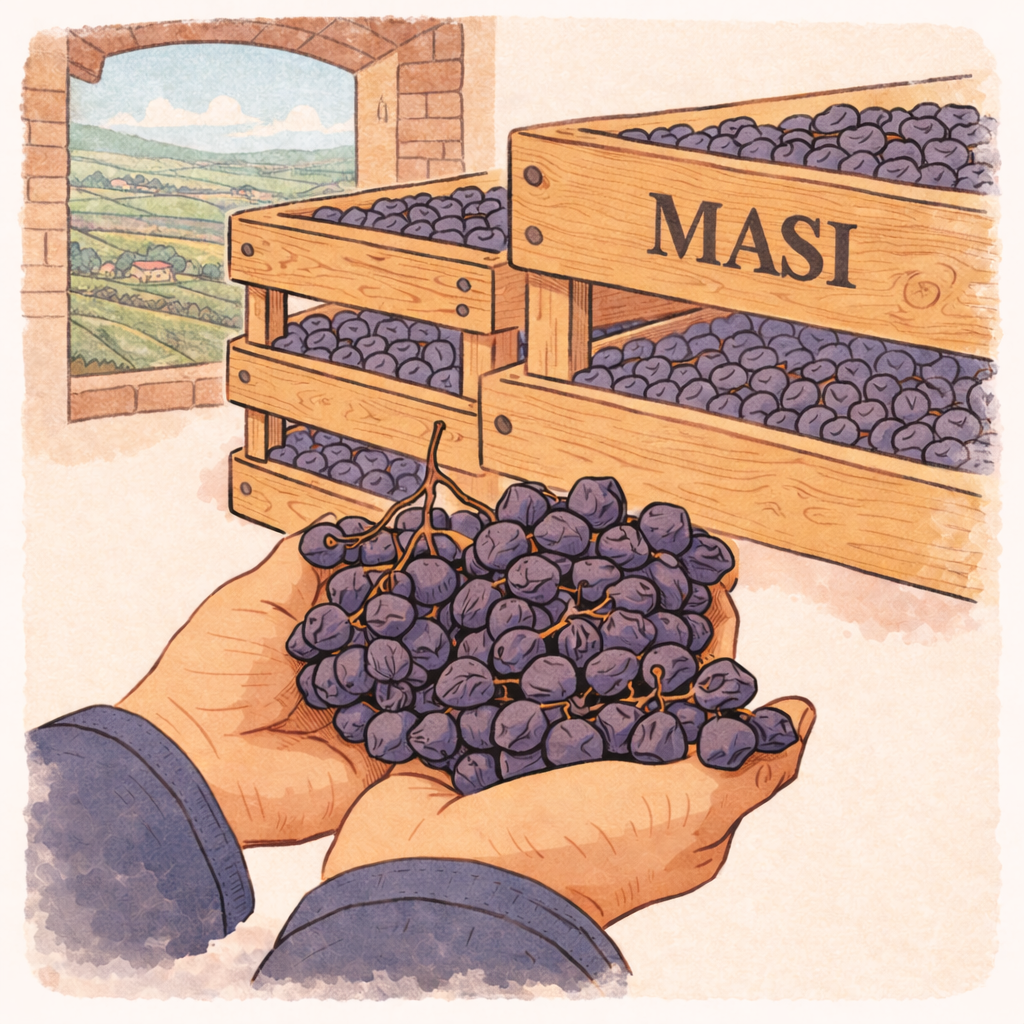
A fruttaio (plural fruttai) is a well ventilated drying room or loft where freshly harvested grapes are laid out and carefully watched while they slowly lose water. This process is called appassimento, and its goal is to concentrate sugars, flavours, and structure before the grapes are pressed.
The idea of drying grapes before making wine is very old in Italy and likely dates back to Roman times, when drying fruit was a common way to preserve it through the winter. Over the centuries, this practice spread across many regions, from the north to the south of the country, becoming especially linked to the production of sweet wines. Famous examples include Recioto in Veneto, Vin Santo in Tuscany, Passito di Pantelleria in Sicily, and many other local styles.
In most of these cases, appassimento is used so that some natural grape sugar remains after fermentation, giving wines their sweetness. Grapes are dried in simple, airy spaces, often attics, barns, or purpose built rooms, where air circulation helps prevent rot while allowing gradual dehydration.
Valpolicella is unusual because the same drying tradition was eventually pushed in a different direction. Here, grapes dried in the fruttaio were fermented until almost all the sugar was converted into alcohol, creating a powerful dry wine. This is how Amarone developed, historically linked to what was originally a sweet wine similar to today’s Recioto della Valpolicella DOCG.
Inside a fruttaio, grapes are placed in a single layer on racks or in crates so air can move freely around each bunch. They are checked frequently, and any damaged berries are removed by hand. This slow, careful drying is demanding and risky, because longer drying times increase the chance of spoilage. But when managed well, the fruttaio allows grapes to reach a level of concentration that defines the character of Amarone.
What yeast is used to ferment Amarone?

Well, this is a thorny one. Yeast (in case you don’t know) is the name given to an unbelievably enormous range of microscopic fungi, whose interactions with humans range from life-threatening infections to astonishingly useful applications in medicine, food (i.e. to make bread rise) and drink, where they are responsible for converting sugar into carbon dioxide and – most importantly – alcohol.
So much most people know. However, it perhaps isn’t appreciated just how stupefyingly various yeast types (or ‘strains’) are. As of yet about 1,500 individual yeasts have been identified, belonging to a wide variety of subspecies – the most important of which for our purposes is the genus known as Saccharomyces. This group of yeasts also known as ‘sugar moulds’ are, as the names suggest, most closely associated with sugars, and interact with wine in a variety of interesting ways (in addition to the fermenters, the infamously finicky Brettanomyces yeasts, with their capacity to enrich or spoil, are members of this family). The most commonly used in fermentation is the yeast known as Saccharomyces cerivisiae, but others contribute too.
However, there’s another complication here, in the form of the choice open to winemakers: to choose yeast or to go natural? Because we’ve only known about yeast for under two centuries thanks to Louis Pasteur; before that, wine occurred semi-naturally, given that these yeasts form on the surface of the grape skins in the wild. As a result, many winemakers feel that the local types of yeast have a particular affinity with the grapes that grow there; others take the view that being the most chemically precise yields the most perfect results.
So what difference does a yeast make? Well let’s look at Amarone. Research has suggested that a succession of yeasts are collectively responsible for fermenting the jewel of Valpolicella, each of which contributing something different. First, a strain of Saccharomyces uvarum which, although dying off at a certain alcohol level, is responsible for the presence of a remarkable amount of glycerol chemicals, which contribute a smooth sweetness that masks the so-called ‘alcohol burn’ effect; and just as well, because it’s after that that the Saccharomyces cerevisiae strains kick in, and it’s those which carry Amarone all the way up to its famed alcoholic power. Both, furthermore, contribute to the low volatile acidity and intense floral and fruity aromas of the resulting wine. For this reason, most great Amarone producers favour this spontaneous (albeit temperature-controlled) fermentation.
What is Ripasso?

Another method employed for making red wine, this one almost unique to Valpolicella! The Amarone process leaves a lot of leftovers – grape skins, stems etc – and, keen to waste nothing, producers in Valpolicella will take some especially good regular wine and ‘repass’ it (i.e. macerate) over them. This gives the wine more body, more structure, more concentration, more oomph. For more, check out our post on how the Valpolicella Ripasso is made.
Is Ripasso a ‘baby Amarone’?
Over the years, Ripasso has had a lot of nicknames due to its status as Amarone’s little brother (there’s another one!): ‘baby Amarone’, ‘little Amarone’, ‘amarino’ (i.e. ‘little bitter’, an inversion of the more famous name) even ‘poor man’s Amarone’, referring to the notorious price differential. As a rule, winemakers don’t really like these; they imply that Ripasso is some sort of second rate version of something else, almost like a failure, whereas it is in fact a noble and extremely superior, elite, and indeed unique style of wine, of which the region of Valpolicella is immensely – and justly – proud.
Is Amarone better than Ripasso?
As we always say, depends what you’re after! Naturally, Amarone is the star wine of the Valpolicella region, but that doesn’t necessarily mean it’s the best suited to every single situation (or indeed every single palate). I mean, Amarone as an accompaniment to a seared fillet of sea bass or a hot fudge sundae wouldn’t work very well!
The same principle applies to more subtle questions. Amarone is a truly massive wine which might overwhelm even dishes usually thought of as suitable to reds. Those dishes – duck ragù with bigoli pasta, for example – would be better suited to the softer, mellower tones of Ripasso.
Another issue is more nebulous, and we might call it here ‘vibe’. Put simply, Amarone is probably not for every day – an unusual wine normally demands unusual situations, and is probably not ideal for a chill Sunday afternoon barbecue in summer. Unless, of course, it’s a really special barbecue!
So give to everything its proper place. There’s nothing like Amarone for a long meditative evening or special occasion – although, to paraphrase the movie Sideways, the day you open a really top Amarone, that’s the special occasion.
How do traditional and modern styles of Amarone differ?
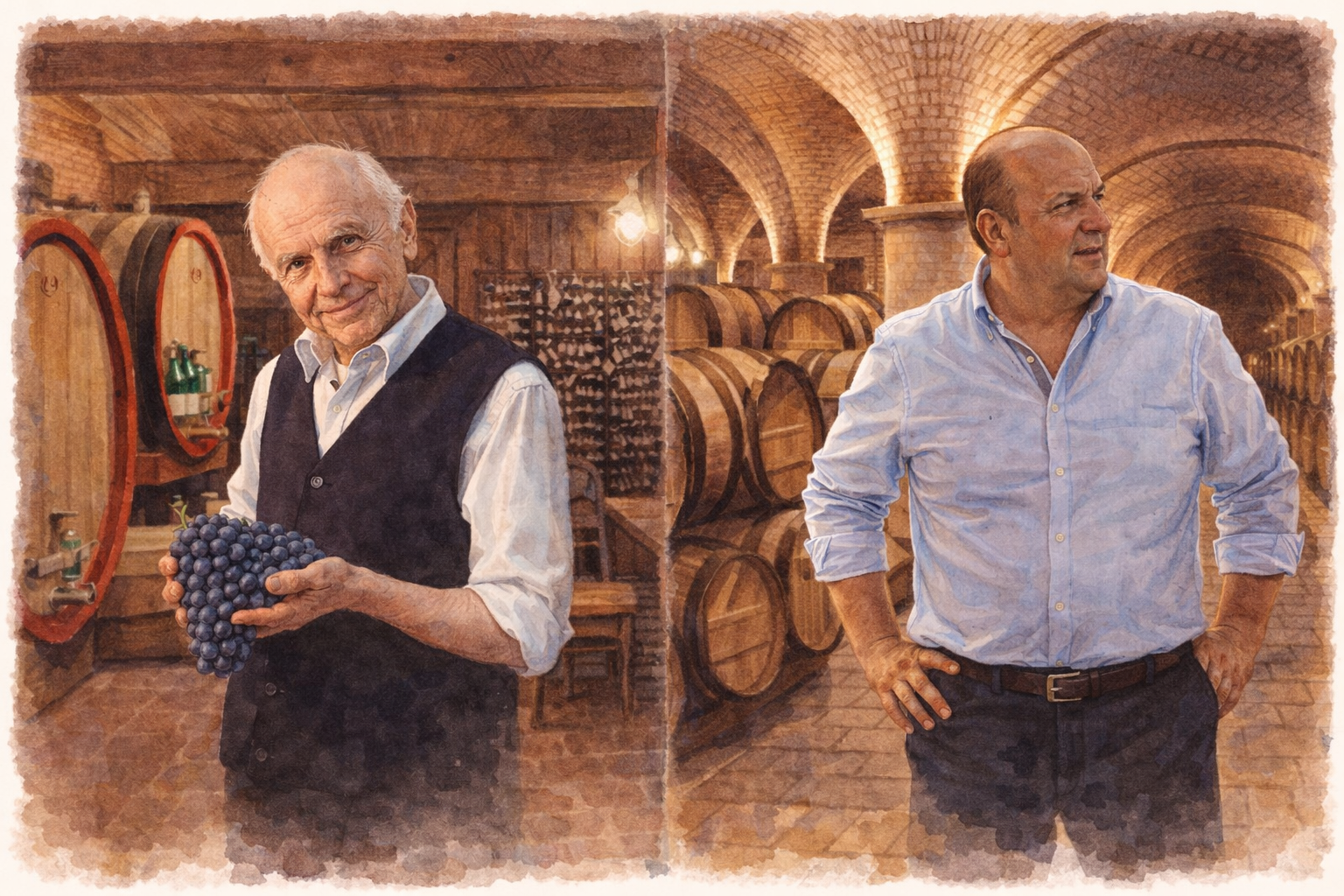 The difference between modern and traditional Amarone is not simply a question of taste, but the result of two distinct winemaking philosophies that developed over time within Valpolicella.
The traditional style of Amarone is closely associated with the historic area of Valpolicella Classica and finds its most influential reference in Giuseppe Quintarelli. Quintarelli shaped a vision of Amarone built on long macerations, slow fermentations, and extended ageing, often spanning decades. His wines were typically aged in large Slavonian oak barrels, which allow gradual oxygen exchange without imparting overt wood aromas. This approach preserves grape character, supports tannin development, and favours balance over immediacy. The resulting wines are structured, layered, and often require many years to fully open, rewarding patience with depth and complexity.
Several producers have drawn inspiration from this long ageing, restrained approach. Le Ragose and Valentina Cubi, among others, are often cited as wineries that follow a similar path, emphasizing vineyard expression, extended maturation, and a measured use of oak. These wines tend to evolve slowly and are generally considered more ageworthy, with structure taking precedence over early accessibility.
By contrast, what is often referred to as the modern style of Amarone developed later, particularly outside the historic Classica zone, and is strongly associated with Romano Dal Forno. Dal Forno introduced a highly controlled, technically rigorous approach focused on extreme grape selection, prolonged appassimento, and intense extraction. His wines are marked by deep concentration, powerful structure, and a more pronounced use of new or small oak barrels, which contributes both oxygen exposure and oak derived aromas.
This style prioritizes density, richness, and precision, often producing wines that are impressive even at a younger stage, though still capable of long ageing. Several producers have adopted elements of this approach, including Carlo Ferragù and Corte Canella, who emphasize concentration, polished tannins, and a more assertive use of oak in their Amarone.
Today, most Amarone producers position themselves somewhere along the spectrum between these two poles. Some lean toward the slower, more restrained expression associated with Quintarelli, while others draw on the technical intensity pioneered by Dal Forno. Understanding this stylistic divide helps explain why Amarone can vary so widely in texture, aroma, and ageing potential, even within the same denomination.
Rather than representing a clash, these two schools have expanded the expressive range of Amarone, offering different interpretations of the same technique, grapes, and territory.
Is Amarone changing today?
In recent years, a third direction has begun to emerge alongside the traditional and modern schools. A growing number of producers are exploring leaner, more drinkable expressions of Amarone, often aiming for alcohol levels closer to 15 percent, greater tension, and lower residual sugar. The intention is to make Amarone that remains faithful to the appassimento technique while being more food friendly and less dominated by power alone.
At the more committed end of this spectrum are producers associated with movements such as ReValpo, a group of Valpolicella growers who question highly commercial interpretations of the denomination. These producers promote a vision that focuses on terroir identity, minimal intervention, and the rediscovery of native grape varieties that had been pushed aside over time, including Molinara. Their approach rejects both excessive extraction and sweetness driven by residual sugar, instead favouring wines with clarity, acidity, and a stronger link to place. They also commit to farming without synthetic chemicals and adopt broadly sustainable practices in the vineyard.
Whether this represents a lasting shift or remains a niche within Amarone is still an open question. What is clear is that it reflects a wider conversation within Valpolicella about balance, longevity, and how Amarone fits at the table rather than standing apart from it.
Interestingly, the move toward leaner Amarone is not limited to producers aligned with natural or low intervention philosophies. Several well established wineries that do not necessarily define themselves as natural have long pursued a similar stylistic direction. Producers such as Speri, Terre d’Orti, and Musella consistently aim for Amarone with greater freshness, moderated alcohol, and restrained sweetness, even when working within the full framework of the DOCG. Musella, while certified biodynamic, shares this focus on balance rather than excess, and all three are part of the Famiglie Storiche group based in Valpolicella.
Their work shows that a more measured style of Amarone is not a recent invention, nor does it require abandoning technical precision. Instead, it represents another valid interpretation of appassimento, one that places emphasis on structure, acidity, and drinkability, and further expands the stylistic range of Amarone today.




 United States
 Canada
 United Kingdom
 Norway
 Switzerland
 Singapore
 South Korea
 Hong Kong
 Japan
Japan Australia
 New Zealand
 Taiwan
 Germany
 Belgium
 Luxembourg
 Netherlands
 France
 Austria
 Denmark
 Portugal
 Spain
Spain Ireland
 Sweden
 Finland
 Rest of the European Union
 Italy
Italy